HomeBlogB2B e-procurement platformB2C online marketplaceBusiness modelC2C platformsWhat Is a Marketplace? Definition, Types & Economic Models

What Is a Marketplace? Definition, Types & Economic Models

What Is a Marketplace? Definition, Types & Economic Models

Definition Marketplace

Marketplaces have changed the way we buy and sell products and services online, connecting sellers and buyers and opening up new opportunities for businesses of every size. This guide covers what a marketplace is, how it works, the main types, the economic models behind them, and the steps to build one.

1. What is a Marketplace?

A marketplace is an online platform where sellers, whether professionals or individuals, offer products or services to buyers. The model is built on intermediation: the platform connects both sides and facilitates the transaction, usually in exchange for a commission or a fixed fee.

Key characteristics of a marketplace:

  • Intermediation: connecting multiple sellers with multiple buyers.
  • Varied economic model: commission on sales, subscriptions, listing fees, and so on.
  • Flexibility: sellers can be individuals or professional businesses.
  • Examples: Amazon, Biked, Etsy, Vinted, Airbnb, and Cdiscount.

Some marketplaces go further with added services like storage and shipping, or advanced marketing tools for sellers. Others operate as internal purchasing hubs: Orpi, France’s largest cooperative real estate network, uses a marketplace-style procurement platform to centralize purchasing for its 1,350 franchised agencies, cutting its average procurement cycle to 3 days and onboarding 52% of its suppliers in under 3 months.

2. Marketplace vs. e-commerce: what's the difference?

E-commerce and marketplace are often used interchangeably, but they describe two distinct models. Both aim to sell products or services online, but how they operate is fundamentally different.

In e-commerce, the transaction happens directly between the seller and the buyer. The site owner is also the seller of whatever’s on offer, similar to a traditional online store. In a marketplace, a third participant enters the picture: the platform itself, acting as an intermediary between many sellers and many buyers. It’s closer to a virtual shopping mall than a single store.

Criteria E-commerce Marketplace
Participants One seller and one buyer Multiple sellers and buyers
Structure Single-vendor online store Virtual shopping mall with multiple vendors
Role of the platform Direct seller of the products offered Intermediary facilitating transactions
Examples Zara.com, Patagonia.com Amazon, Airbnb, Rakuten, Decathlon.fr

The core distinction is the number of parties involved and the nature of the relationship between the platform owner and the sellers. A marketplace can technically be built as an e-commerce site, but a regular e-commerce site isn’t automatically a marketplace.

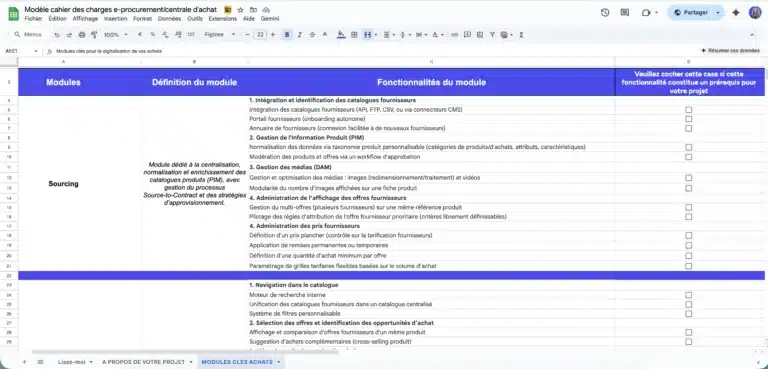
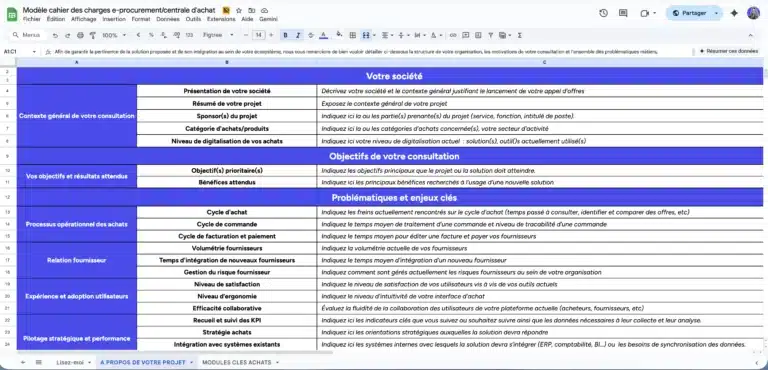
Ensure nothing is overlooked in your project specifications

A ready-to-use template to quickly frame your e-procurement or purchasing group project, compare market solutions, and secure your vendor consultation process.

Comprehensive model used in B2C, B2B or C2C projects and ready to adapt.

3. How does a marketplace work?

A marketplace runs on three pillars: the operator, the sellers, and the buyers.

  • The operator launches and runs the platform, keeping it secure and easy to use. Their job is to build an environment where commercial exchanges happen smoothly: regulating supply and demand, ensuring product quality, and providing the tools sellers and buyers need to transact confidently.
  • The sellers are the suppliers on the platform. They use it to expand their reach and grow revenue, an additional sales channel for those already selling elsewhere, or a low-cost way in for those without an existing online presence.
  • The buyers benefit from the work put in by the operator and sellers: a wide selection of products, the ability to compare offers from many sellers in one place, and a simplified, more secure buying experience.

Together, these three pillars form an ecosystem where each side gets something out of the relationship, which is what makes the model self-sustaining once it reaches critical mass.

The commission a marketplace charges, known as the take rate, varies enormously by industry: Vinted operates at roughly 5%, Amazon and Rakuten around 10 to 12%, Airbnb around 11%, and take rates run considerably higher for services and digital goods, TicketMaster around 26% and the App Store around 30%.

4. The different types of marketplaces

Marketplaces are categorized along a few different axes.

By participants: B2C, B2B, and C2C

  • B2C (Business to Consumer): professional sellers connecting with individual buyers. The most widespread model, examples include La Redoute, Cdiscount, and the MAIF Social Club, which turned the insurer’s manually run private sales into a full marketplace of over 100 eco-responsible and made-in-France brands, running at least two private sales a week.
  • B2B (Business to Business): transactions between companies, often for sourcing raw materials or managing supplier relationships. Alibaba and Amazon Business are the best-known examples; on a smaller, sport-federation scale, the French Tennis Federation replaced a print catalog and dropshipping process with Proshop FFT, a B2B marketplace now serving over 7,000 affiliated clubs, which grew its GMV by 32% between 2023 and 2024.
  • C2C (Consumer to Consumer): individuals selling or renting goods directly to each other, often associated with the collaborative and circular economy. Vinted, Leboncoin, and Preppy Sport (a C2C marketplace for secondhand equestrian gear that now counts more than 95,000 registered users) are all examples.

By breadth of offer: horizontal and vertical

  • Horizontal marketplaces bring together a wide variety of categories to reach the broadest possible audience, like Amazon, eBay, or Auchan.
  • Vertical marketplaces specialize in one category or sector with deeper, more targeted expertise, like ManoMano for DIY or Doctolib for healthcare appointment booking.

By nature of goods: products and services

  • Product marketplaces sell physical goods (new or secondhand) or digital products, and often manage logistics as part of the offer. Etsy is the best-known example; on the secondhand side, TocToc Fishing built the first marketplace dedicated to used fishing gear, with logistics adapted for rods and other bulky equipment. Udemy is a comparable example for digital products, an open marketplace of courses built by many independent instructors rather than a single content team.
  • Service marketplaces offer intangible services like transportation, consulting, or accommodation, and typically need features like geolocation, availability management, and reviews. Uber is the clearest example.

5. The economic models of marketplaces

Marketplace revenue models are varied and often combined, adapted to the platform’s niche and users.

  • Commissions, the dominant model: a percentage taken from each transaction. Attractive to sellers since they only pay when they make a sale, and operators can adjust rates by category or season.
  • Subscriptions: a recurring fee giving sellers access to features or increased visibility, better suited to sectors where transactions are complex or infrequent.
  • Listing fees: common on classifieds or unique-item marketplaces, where sellers pay to list, sometimes with paid options to boost visibility.
  • Lead fees: charged when a connection is made rather than a sale, common on service marketplaces where transaction volume is lower but each lead is valuable.
  • Freemium: a free tier to maximize adoption, with paid tiers unlocking advanced features.
  • Advertising: monetizing the platform’s audience through product promotion or store placement.

Commissions alone don’t guarantee profitability. Operators also need to account for refund costs, chargebacks, and the operational overhead of handling marketplace disputes, a well-structured dispute process protects both your margins and your seller relationships.

"A successful marketplace relies above all on a clear vision and rigorous execution: identify a specific need, develop a differentiated offer, and always place the user experience at the heart of your strategy. Adopting a flexible approach in your economic model and staying attuned to market trends are essential to ensure the sustainability and competitiveness of your platform."

Alexandre Duquenoy

Alexandre Duquenoy

6. How to create a marketplace

1. Define your niche

A well-defined niche focuses your marketing and lets you meet a specific market segment’s needs precisely. Look at market demand for an unmet need, assess whether you have real expertise in the sector, and analyze how intense the competition already is and whether there’s genuine room for a new player.

2. Choose your economic model

Decide how to monetize based on how your sellers and buyers actually behave: commissions, subscriptions, listing fees, or advertising, as covered above.

3. Select a technical solution

Your options are broadly: a turnkey SaaS solution (quick to implement, with a full range of built-in features), custom development (more flexible but considerably more costly and slower), or CMS extensions like WordPress plugins (simple and cheap, but limited as you scale). Choose based on your budget, in-house technical skills, and long-term goals.

4. Attract your first users

For sellers: reduced fees or free premium features for early sign-ups, and a clear case for the visibility and tools they get. For buyers: solid SEO for organic traffic, launch promotions or referral programs, and content marketing to build a community around the platform. An excellent first experience for both sides is what drives loyalty and word of mouth afterward.

5. Comply with regulations

Integrate a payment service provider built for marketplace-style split payments, such as Stripe Connect or MangoPay, and if your platform handles funds directly, check what licenses you actually need (Payment Institution or Electronic Money Institution status, for instance) before launch.

6. Set a realistic budget

Budget varies enormously depending on the technical approach you choose. According to our own detailed cost breakdown, a custom-built marketplace typically runs €168,000 to €700,000 in total for the first year once design, development, legal, hosting, and maintenance are all counted, while a SaaS-based build typically runs €60,000 to €200,000 for the same scope. The gap comes almost entirely from development and legal costs being largely absorbed into the SaaS subscription rather than built from scratch.
Marketplaces play a central role in the digital economy, transforming how sellers and buyers interact. With a clear strategy, the right technology, and a solid economic model, they offer real room to grow.

Ready to get started? Download our free specifications template or talk to our team, no obligation.

Do you want to build an agile and future-proof platform?

Let’s discuss it. our expertise extends beyond the tool as we help you structure your project with the right methodology to guarantee its success.