HomeBlogB2B e-procurement platformB2C online marketplaceBusiness modelC2C platformsHow Much Does It Cost to Build an Online Marketplace? (2026)
How Much Does It Cost to Build an Online Marketplace? (2026)
Launching an online marketplace is exciting, but it’s also a project you need to understand […]
How Much Does It Cost to Build an Online Marketplace? (2026)
- Emeline Kerloch
- 12 minutes reading
Launching an online marketplace is exciting, but it’s also a project you need to understand the true cost of before you start building. How much does it cost to build an online marketplace? The honest answer: it depends almost entirely on one choice, custom development versus a SaaS platform, plus two line items many founders underestimate at the planning stage, legal compliance and seller acquisition.
Table of contents
- Why a marketplace costs more than a standard e-commerce site
- Design and strategic planning
- Marketplace development
- Legal setup and compliance
- Payments, KYC and transaction fees
- Hosting, maintenance and logistics
- The forgotten line item: acquiring your first sellers
- The SaaS alternative: a leaner, more predictable path
- FAQ
At a glance
- SaaS, simple project: around $26,000 all-in over 24 months, no custom development, base theme.
- SaaS, standard project: between $70,000 and $230,000 in year one.
- Custom development: between $195,000 and $805,000 in year one.
Often forgotten: seller acquisition can eat up 20-40% of a launch budget, before you’ve spent a dollar on buyer-facing marketing.
1. Why a marketplace costs more than a standard e-commerce site
A marketplace is consistently more expensive to launch than a standard online store, and it’s not simply a matter of scale, it’s a matter of structure. A single-vendor store only has to manage one seller’s flow, yours. A marketplace has to serve two audiences at once, buyers and sellers, each with its own dashboard, permissions and rules. That two-sided architecture adds technical complexity from day one and requires building blocks a standard e-commerce site never needs: split payments across multiple sellers, seller identity verification (KYC), and often an escrow mechanism that holds funds until delivery is confirmed.
2. Design and strategic planning
Before development even starts, a proper design phase is essential. Here’s the cost difference between custom development and a SaaS platform for design alone:
Custom development (in-house):
- UX/UI design and user testing: $12,000 to $35,000
- Feature planning and analysis (sellers, products, transactions): $17,500 to $46,000
- Moderation and community management setup: $6,000 to $11,500
- Third-party tool integration planning (payments, logistics): $2,500 to $11,500
- Scalability and technical architecture: $6,000 to $23,000
- Data analytics planning: $6,000 to $17,500
- Legal and compliance scoping: $6,000 to $11,500
Estimated total for design: $58,000 to over $175,000.
SaaS platform: most of these costs are already covered by the platform. Minor template customization typically runs $1,200 to $6,000, with features, moderation and analytics already built in for most solutions.
Estimated total for design on SaaS: $2,500 to $11,500.
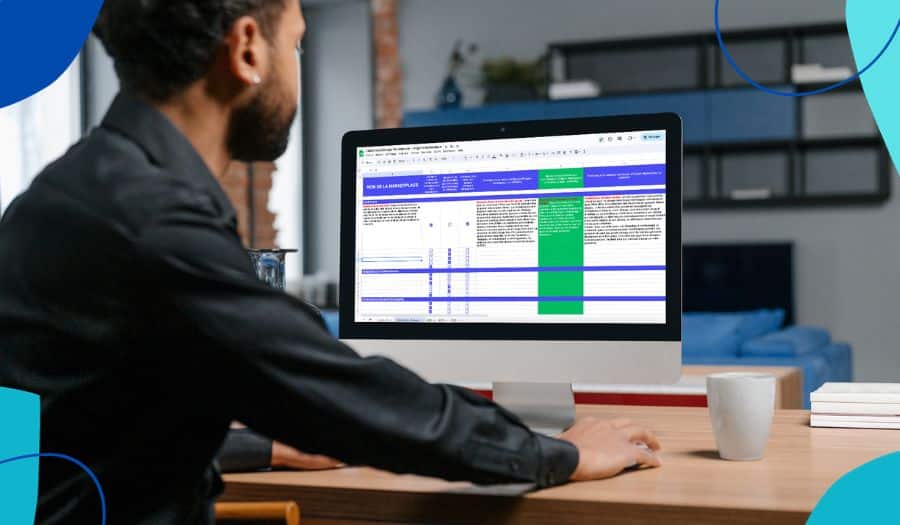
Download our free marketplace requirements template to structure this phase, whichever technical path you choose.
Download our free marketplace specifications template.
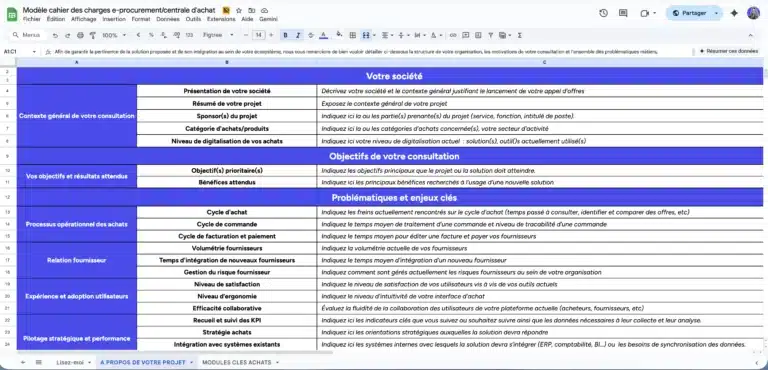
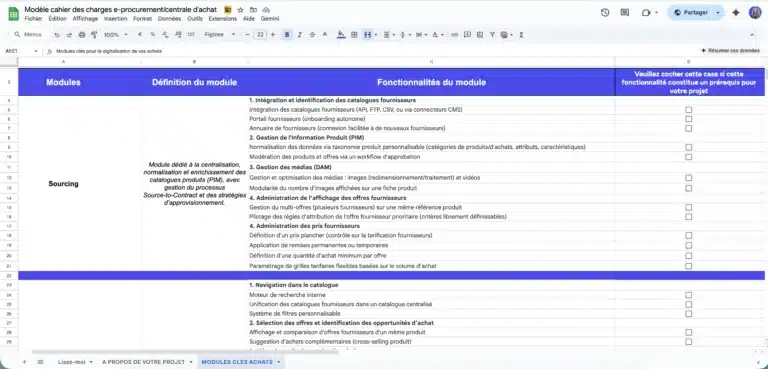
A ready-to-use template to quickly frame your e-procurement or purchasing group project, compare market solutions, and secure your vendor consultation process.
Comprehensive model used in B2C, B2B or C2C projects and ready to adapt.
3. Marketplace development
Development is the single largest share of the total budget.
Custom development: core feature development (seller management, products, transactions, payments): $70,000 to $345,000 depending on complexity and developer day rates. Third-party integrations (payments, shipping, CRM): $23,000 to $115,000. Security and regulatory compliance: $6,000 to $23,000. Testing and deployment: $11,500 to $46,000.
Estimated total for custom development: $98,000 to $470,000.
SaaS platform: custom feature work: $1,200 to $11,500. Integrations not natively supported: $600 to $34,500 depending on the case. Security and compliance: generally included. Testing and deployment: $1,200 to $6,000, since the platform itself has already been tested by the vendor.
Estimated total for development on SaaS: $3,000 to $46,000.
For a simple project, no custom development, base theme, these two phases (design and development) can fit inside a single SaaS subscription with no setup fee, for a software cost of around $26,000 all-in over 24 months.
4. Legal setup and compliance
Marketplaces operate under a dense regulatory framework: data protection, seller contracts, terms of service, and, depending on your markets, digital services and tax reporting obligations. For the full breakdown of these obligations, our guide to the legal framework for marketplaces covers them one by one.
On budget specifically, as a rough guide, several e-commerce-focused legal providers quote figures in this range: drafting marketplace-specific terms of service, $1,200 to $6,000 with a specialized attorney; data protection compliance work (data mapping, processing registers), $2,500 to $11,500; setting up the legal entity itself, $600 to $3,500; and recurring legal costs (insurance, contract updates, audits), $3,500 to $23,000 per year. These aren’t Origami-specific figures, they’re a general order of magnitude for e-commerce legal consulting, converted from a French market benchmark (see notes).
Estimated total for legal, custom development path: $6,000 to $23,000. SaaS platforms typically bundle pre-built compliance frameworks, which meaningfully reduces this line item for the operator.
5. Payments, KYC and transaction fees
Behind every marketplace transaction sits a payment infrastructure more complex than a simple e-commerce checkout, since funds have to be routed to multiple sellers. Integrating a provider like Stripe Connect, MangoPay or Adyen for Platforms typically costs $3,500 to $17,500 depending on complexity, and handling deferred payments or disputes can add $6,000 to $23,000.
KYC (seller identity verification), mandatory to stay compliant with payment regulations, is a recurring cost that’s easy to overlook: some providers charge roughly $0.60 to $6 per check, which looks small per seller but adds up fast once you’re onboarding hundreds of them. On top of that, expect recurring transaction fees of roughly 1.5% to 2.9% per card payment, on top of which a marketplace typically layers its own 1% to 2% platform fee, separate from its take-rate commission.
6. Hosting, maintenance and logistics
Hosting costs vary with traffic and infrastructure. For a custom build, budget $1,200 to $3,500 per month, with annual maintenance typically running 10-20% of the initial development cost. On a SaaS platform, hosting and maintenance are usually bundled into the subscription, which makes the cost predictable.
If your marketplace sells physical goods, there’s another line item to plan for: logistics. Storage, if you’re managing inventory yourself, is a real space cost. Shipping costs depend on your carrier agreements, volume and shipment frequency. Returns handling, finally, requires reverse logistics, which carries its own cost that’s often underestimated at the initial budgeting stage.
7. The forgotten line item: acquiring your first sellers
This is the most consistently underestimated cost in a marketplace launch budget. Before you get your first buyer, you need a critical mass of sellers, and convincing sellers to join a still-empty platform takes real investment, not just time.
Several now-famous marketplaces solved this by subsidizing supply before demand:
- Airbnb famously funded professional photography for its earliest hosts, so listings would be attractive enough to convert the first travelers.
- Amazon, in its early days, sold its own products to populate its catalog before third-party sellers joined. Neither move was incidental, both created perceived value before network effects could kick in on their own.
In practice, this budget spreads across a few levers: content campaigns targeting seller search intent rather than buyer intent, direct outreach to the brands or suppliers you’re targeting, and automated onboarding (email sequences, welcome incentives, nudges toward that first listing) to reduce drop-off once sellers do sign up.
Seller acquisition can represent 20-40% of the initial launch budget depending on how competitive your target sector is, an order of magnitude worth planning for from the first budget draft, not discovering halfway through.
8. The SaaS alternative: a leaner, more predictable path
| Line item | Custom development (in-house) | SaaS platform |
|---|---|---|
| Design | $58,000 to over $175,000 | $2,500 to $11,500 |
| Development | $98,000 to $470,000 | $3,000 to $46,000 |
| Legal | $6,000 to $23,000 | Included or minimal |
| Hosting | $1,200 to $3,500/month | $600 to $3,500/month |
| Maintenance (year 1) | $15,000 to $125,000 | Generally included |
| Estimated total (year 1) | $195,000 to $805,000 | $70,000 to $230,000 |
| Entry-level, simple project | Not applicable | ≈ $26,000 over 24 months |
That last row, entry-level, only fits a simple project: no custom development, a base theme, none of the customization that pushes the budget up toward the standard range above it. As soon as volume or functional complexity increases, the SaaS budget naturally moves up toward the $70,000-$230,000 range.
The comparison makes the case for SaaS clearly: significantly lower upfront costs, maintenance usually bundled in, and less day-to-day operational complexity. Custom development still earns its place for projects with genuinely specific needs (deep integration with an existing IT system, particular regulatory constraints), but it comes with meaningfully higher cost and a longer path to launch.
The right call depends on your goals, your go-to-market strategy and how much capital you can commit, not on a universal rule.
Ready to scope your project?
Let’s talk. Our expertise isn’t limited to a subscription price tag, we help you plan the full budget, development, legal, payments and seller acquisition included.

Frequently asked questions
For a simple SaaS project, budget around $26,000 all-in over 24 months. For most projects, year one runs $70,000 to $230,000 on SaaS, and $195,000 to $805,000 for custom development. On top of that, plan a marketing budget and a seller-acquisition budget, neither of which should be an afterthought.
Because it serves two audiences at once, buyers and sellers, each with its own interface, rules and permissions, and because it needs building blocks a standard e-commerce site doesn’t, like split payments across multiple sellers and seller identity verification (KYC).
It’s a line item that’s often missing from launch budgets entirely, even though it can represent 20-40% of the initial budget depending on how competitive the sector is. It covers direct outreach, content targeting seller search intent, and automated onboarding to limit drop-off after signup.
In the large majority of cases, yes, especially once you factor in maintenance, hosting and security updates, which are usually bundled into a SaaS subscription and billed separately for custom builds. Custom development only becomes the better call for genuinely specific requirements that justify giving up that budget predictability.
Sources disagree here: some vendors recommend a marketing budget equal to the technical budget, others suggest 10-20% of the total budget from the first months. Either way, the message is the same: this isn’t a minor line item, and it’s better to budget for it upfront than to discover the need after the technical budget is already spent.