Procure-to-Pay, Purchase-to-Pay, or Source-to-Pay?
Arnaud
5 minute read
Did you know that according to IBM, organizations using AI in procurement execution can achieve a total annual cost to perform procurement processes that’s 28% lower, as a share of total expenditure? In the business world, managing purchases and payments is crucial to maintaining competitiveness and profitability. The terms Procure-to-Pay (P2P), Purchase-to-Pay (also P2P), and Source-to-Pay (S2P) are often used interchangeably, but they cover distinct processes.
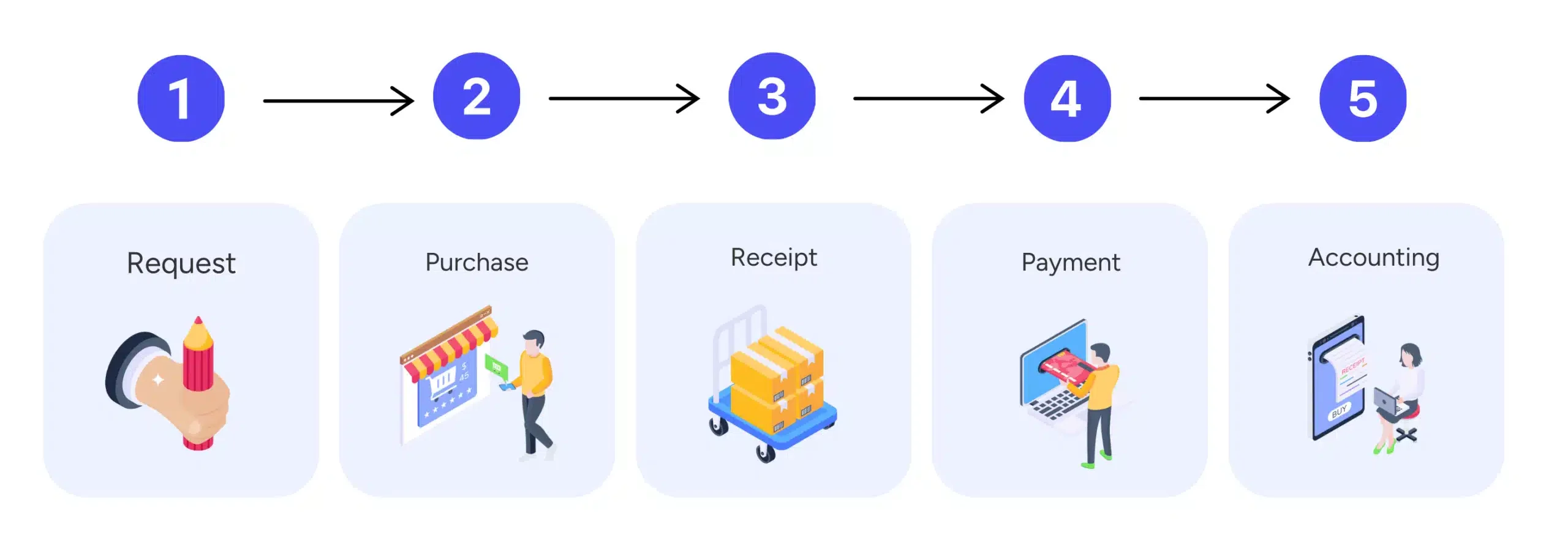
The Procure-to-Pay (P2P) is an integrated process that connects a company’s purchasing and accounts payable functions. It begins with the expression of a need for goods or services and ends with payment to the supplier. The key steps include:
Purchase request: Identification of the internal need.
Purchase: Selection and ordering of the supplier.
Receipt: Receipt and verification of goods or services.
Payment: Processing and settlement of the invoice.
Accounting: Recording of transactions in accounting.
The P2P primarily aims to optimize costs and create value throughout the purchasing process.
2. What is Purchase-to-Pay?
The Purchase-to-Pay is another term for Procure-to-Pay (P2P). They are simply two different terms referring to the same process, covering the entire purchasing cycle from ordering to payment for goods or services.
Ready to turn your B2B, B2C, or C2C marketplace vision into reality?
To help you develop the best platform possible, we’ve gathered all the must-have features, key technical considerations, and best practices in a comprehensive document:
Download the Specifications template 🗒
Perfect for smaller or medium-scale projects without a formal purchasing process. It will help you outline your requirements effectively and streamline your selection process.
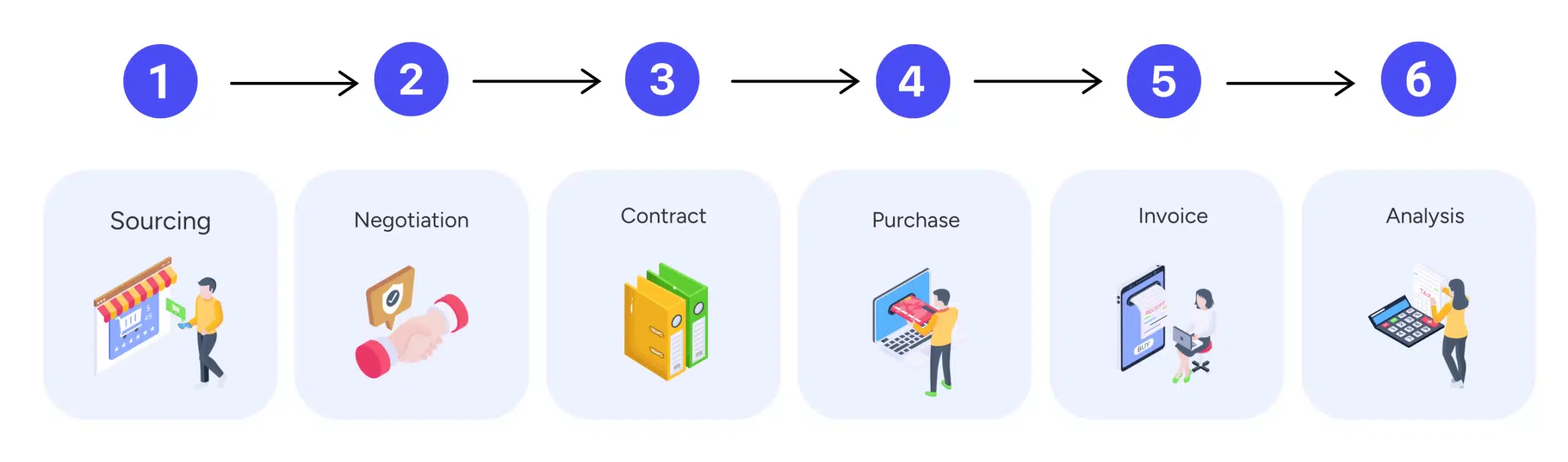
The Source-to-Pay (S2P) is a more comprehensive process that encompasses all purchasing-related activities, from the identification of needs to final payment. Unlike P2P, S2P integrates strategic sourcing and contract management steps, offering a more complete and strategic overview of purchasing. The main components of S2P include:
Sourcing: Research and selection of suppliers.
Negotiation: Discussion of contractual terms and conditions.
Contract: Signing agreements with suppliers.
Purchase: Ordering goods or services.
Invoice and payment management: Processing payments in an optimized manner.
Spend analysis: Performance evaluation and cost optimization.
S2P utilizes advanced technologies, such as Big Data and digital networks, to enhance purchasing efficiency and provide better visibility into spending.
4. What is the difference between P2P and S2P?
Although the P2P and S2P processes share similarities, the main difference lies in the beginning of the process. P2P typically starts with the request for goods or services, while S2P begins with the strategic sourcing of suppliers. This approach allows S2P to:
Select the best suppliers.
Negotiate advantageous contracts.
Optimize internal controls.
Improve supply chain efficiency.
Simplify supplier relationship management.
By integrating these steps, S2P offers a more holistic and strategic view of purchasing, which can lead to significant cost savings and better risk management.
5. P2P = Procure or Purchase?
The term P2P can refer to both Procure-to-Pay and Purchase-to-Pay. Both expressions are interchangeable and refer to the same integrated purchasing and payment process. The choice between “Procure” and “Purchase” often depends on the company’s terminological preferences or the specific context.
6. Comparison between P2P and S2P
Comparison: Procure-to-Pay (P2P) vs. Source-to-Pay (S2P)
Aspect
Procure-to-Pay (P2P)
Source-to-Pay (S2P)
Scope
Integration of purchasing and payments
Comprehensive integration including sourcing
Process Start
Internal request for goods/services
Sourcing and supplier selection
Contract Management
Less in-depth
Strategic approach and contract negotiation
Technology
Traditional solutions
Advanced technologies (Big Data, digital)
Objectives
Cost optimization and value creation
Strategic optimization, risk management
Visibility
Limited to purchasing and payment
Overview of spending and performance
If you’re trying to pin down the exact difference between source-to-pay and procure-to-pay, it comes down to where the process starts. Procure-to-pay begins once a supplier is already chosen: someone raises a request, it gets approved, ordered, received and paid. Source-to-pay starts earlier, at the sourcing stage, before any supplier relationship exists.
So every P2P process is really just the second half of a full S2P cycle. Companies that only need the transactional part (ordering and paying) tend to describe what they do as procure-to-pay or purchase-to-pay. Companies that also need to find, evaluate and negotiate with suppliers before any of that happens are usually the ones talking about source-to-pay.
The S2P offers a more comprehensive and strategic approach, ideal for companies with complex purchasing needs. It enables better visibility into spending, optimized supplier management, and risk reduction.
Which one do you actually need: P2P or S2P?
If your supplier list is stable and your main pain point is slow approvals or manual invoice matching, a P2P (or purchase-to-pay) solution usually covers it. If you’re regularly bringing on new suppliers, negotiating contracts, or trying to get visibility into spend before you even place an order, you need the broader S2P scope. Many companies start with P2P to fix the transactional bottleneck, then extend into sourcing once that’s under control, rather than trying to overhaul everything at once.
Adopting an integrated Source-to-Pay (S2P) approach is essential to optimize your purchasing processes. By leveraging an innovative marketplace like Origami Marketplace, you can not only centralize your operations but also benefit from increased visibility into your spending and strengthened supplier relationships. Investing in advanced technological solutions allows you to transform your purchasing into a true lever for performance and strategic growth.
Antoine Mantel
→ Talk to our solutions expert
7. Why choose Origami Marketplace?
While traditional Procure-to-Pay and Source-to-Pay solutions offer robust features, Origami Marketplace provides an innovative alternative based on a marketplace model. This approach allows for further centralization and simplification of the purchasing process while offering increased flexibility and integration.
Advantages of Origami Marketplace:
Comprehensive solution: Integrates sourcing, contract management, purchasing, and payments within a single platform.
Flexibility and scalability: Easily adapts to the specific needs of each company.
Improved collaboration: Facilitates communication and trust with business partners.
Visibility and control: Provides complete visibility into spending and allows for rigorous budget control.
Advanced automation: Reduces manual processes, minimizing errors and increasing productivity.
A vision beyond Source-to-Pay (S2P):
Origami Marketplace does not merely cover the traditional aspects of S2P. By adopting a marketplace approach, it allows companies to benefit from an open ecosystem where different solutions can coexist and integrate harmoniously. This results in better resource optimization, more effective supplier relationship management, and the ability to innovate rapidly.
Choosing between Procure-to-Pay, Purchase-to-Pay, and Source-to-Pay depends on your company’s specific needs. If you are looking for a more strategic and integrated solution, Source-to-Pay is the way to go. However, to go even further and benefit from a complete and flexible solution, Origami Marketplace represents a superior alternative to traditional solutions.
Do you want to optimize your purchasing and payment processes in an innovative way?
Discover how Origami Marketplace can transform your purchasing management into a true source of added value. Contact us today or consult our P2P transformation guides to learn more.
Yes. They’re two names for the same process, covering everything from placing an order to paying the supplier. Which term a company or software vendor uses is mostly a matter of habit, not a real distinction.
What is the main difference between Source-to-Pay and Procure-to-Pay?
Source-to-pay includes everything procure-to-pay does, plus the earlier sourcing and contract negotiation steps. Procure-to-pay starts once a supplier is already under contract; source-to-pay starts before that supplier relationship exists.
Is Source-to-Pay better than Procure-to-Pay?
Neither is “better,” they cover different scopes. A company with a small, stable supplier base may never need more than P2P. A company that sources frequently from new suppliers usually needs the full S2P scope to get real visibility and negotiating leverage.
Nous utilisons des cookies pour vous garantir la meilleure expérience sur notre site web. Si vous continuez à utiliser ce site, nous supposerons que vous en êtes satisfait.