HomeBlogB2B e-procurement platformB2B Procurement Platform: What It Is & How It Works
B2B Procurement Platform: What It Is & How It Works
A B2B procurement platform is software that lets a company centralize how it buys from […]
B2B Procurement Platform: What It Is & How It Works
- Emeline Kerloch
- 6 minutes reading
A B2B procurement platform is software that lets a company centralize how it buys from suppliers: one catalog, one set of negotiated terms, one place to track every order. It’s often confused with two things it isn’t. It’s not just a purchasing module bolted onto an ERP, and it’s not the same as a traditional buying group, where a central office negotiates prices and simply redistributes stock to its members. A procurement platform sits between the two: it keeps the negotiating power of centralized buying, but gives every buyer direct visibility into suppliers, catalogs, and pricing, instead of routing everything through a single intermediary.
That distinction matters more than it sounds. Companies that get it wrong end up rebuilding their purchasing process twice: once when they adopt a rigid buying group model, and again a few years later when its limitations start showing.
What is a B2B e-procurement platform and how is it different from an ERP module or a buying group?
An ERP purchasing module handles transactions: it records what was ordered, approves it, and reconciles the invoice. It’s built for accounting accuracy, not for supplier discovery or catalog management, which is why most companies still manage supplier catalogs in spreadsheets even when their ERP is otherwise solid.
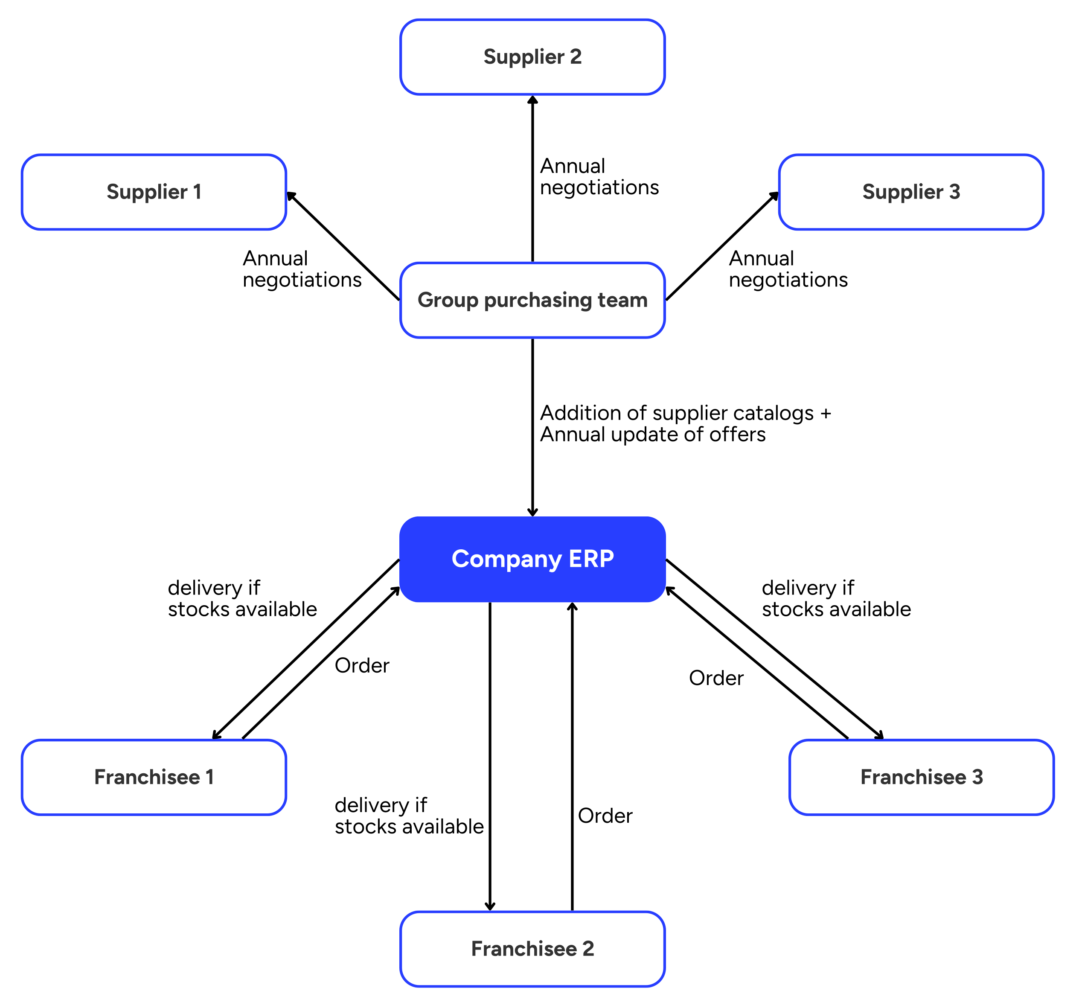
A traditional buying group solves a different problem. It aggregates demand across many buyers to negotiate better wholesale prices, then distributes products according to what each buyer needs. It works well for standardizing costs, but it usually locks buyers into a fixed list of suppliers chosen by the group, which limits their ability to source locally or switch suppliers when one underperforms.
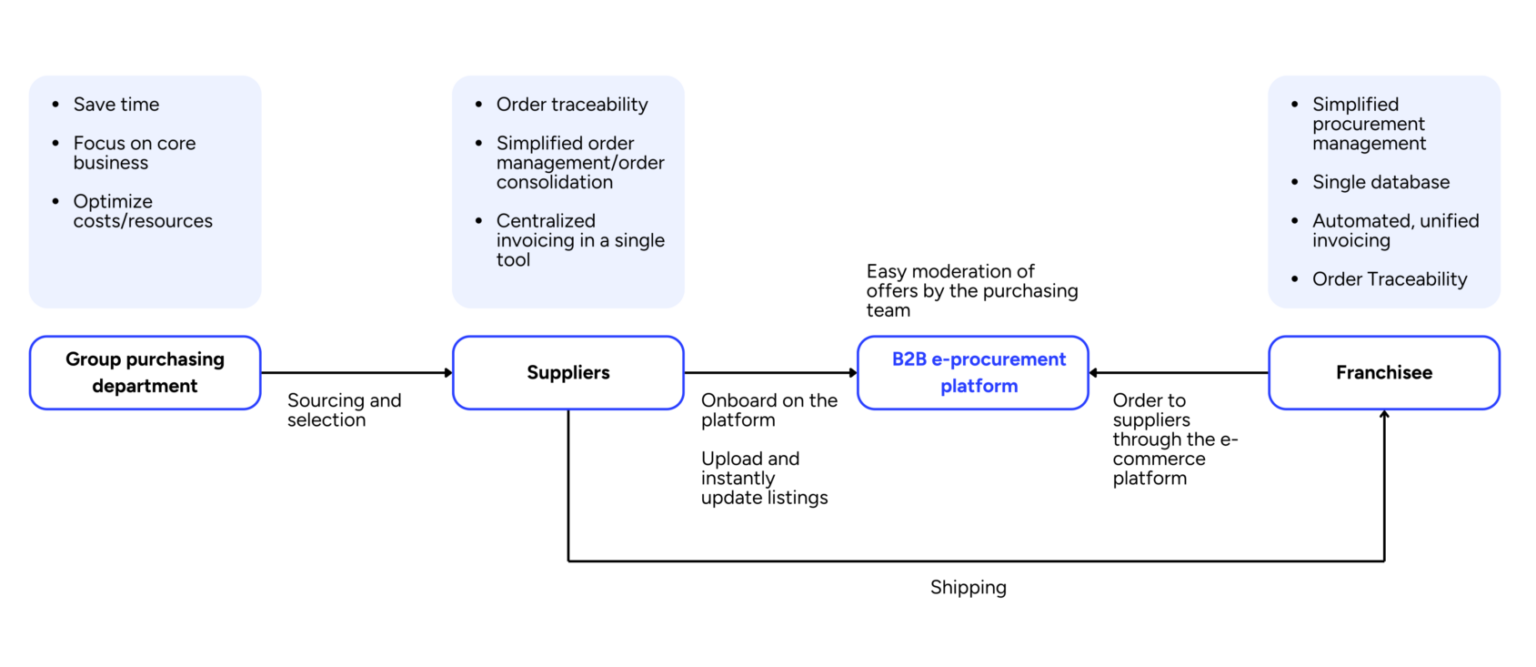
A B2B e-procurement platform combines the negotiating leverage of the buying group with the flexibility of an open marketplace. Suppliers upload and manage their own catalogs. Buyers see everything available to them in one interface, compare options, and order directly, while the platform still enforces the contract terms, pricing tiers, and approval rules the organization has set. Nobody has to choose between buying power and supplier choice.
How a B2B procurement platform actually works
Most procurement platforms follow the same basic sequence, even if the interface differs from one vendor to the next.
Suppliers are onboarded first. They register, upload their product or service catalog, and set their own pricing, minimum order quantities, and delivery terms within the limits the buying organization has negotiated. This step alone removes a lot of the manual data entry that slows down a classic ERP-based procurement setup, since nobody on the buyer’s side has to key in someone else’s catalog by hand.
Once catalogs are live, buyers submit purchase requests through the platform rather than by email. Requests route automatically to the right approver based on department, budget, or spend threshold, so nothing gets stuck in an inbox waiting for someone to notice it.
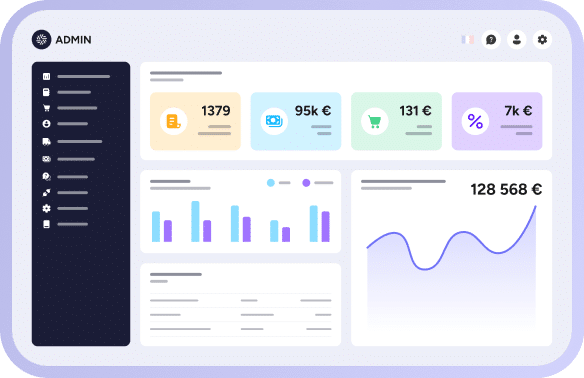
After approval, the order goes to the supplier, and the platform tracks it through delivery and invoicing. Reporting sits on top of all of this: what was bought, from whom, at what price, and whether it matched the negotiated terms.
According to Ardent Partners’ State of ePayables 2025 report, organizations with mature procurement automation process an invoice for under €3 on average, compared with €12 to €15 for those still relying on manual, email-based purchasing. That gap alone explains why so many mid-sized companies are moving off spreadsheets faster than expected: the market for Procure-to-Pay platforms was valued at $8.21 billion in 2025 and is projected to reach $15.15 billion by 2033, according to SNS Insider.

Note from our team: when we set up Origami Marketplace for a client, the single biggest time saver is almost always supplier self-onboarding. Once suppliers manage their own catalogs, your team stops being a data-entry bottleneck and starts actually managing the relationship.
Setting up a centralized purchasing platform: benefits and downsides
Franchise networks are one of the clearest use cases for this model, and a useful way to see the trade-offs in practice. A group buyer negotiates wholesale pricing and distributes products to franchisees based on demand, which brings real advantages: negotiated pricing, economies of scale, simplified logistics, and a consistent experience across every location.
The downsides show up over time. Franchisees are often locked into corporate-approved suppliers, which limits control over cash flow and inventory. When the group runs low on stock, replenishment slows down. Because each product typically has a single supplier, a logistics failure or a geopolitical disruption at that one supplier can ripple through the entire network. And for companies operating across regions or countries, sourcing local products through a centralized structure is often difficult.
An e-procurement marketplace addresses these problems directly, by opening up supplier choice without giving up the negotiating power that made centralized buying attractive in the first place.
Why centralize purchasing through a marketplace rather than a traditional buying group
Four things tend to matter most once an organization makes the switch.
Flexibility. Suppliers can be added or removed as market conditions change, so the organization can react to a new trend, a price shift, or a specific buyer request without waiting for a full system reconfiguration.
Stronger supplier relationships. Centralized communication and transparent transactions build more trust between the organization and its suppliers than a scattered, buyer-by-buyer purchasing process ever could.
Better risk management. Diversifying suppliers through the marketplace reduces exposure to any single point of failure, which matters whenever supply chains are disrupted, and most organizations have experienced at least one disruption in the past few years.
Lower operating costs. Automating what used to be manual, paperwork-heavy purchasing cuts administrative overhead and reduces the errors that come with re-entering the same data in multiple systems.
Origami Marketplace in practice: the Orpi network
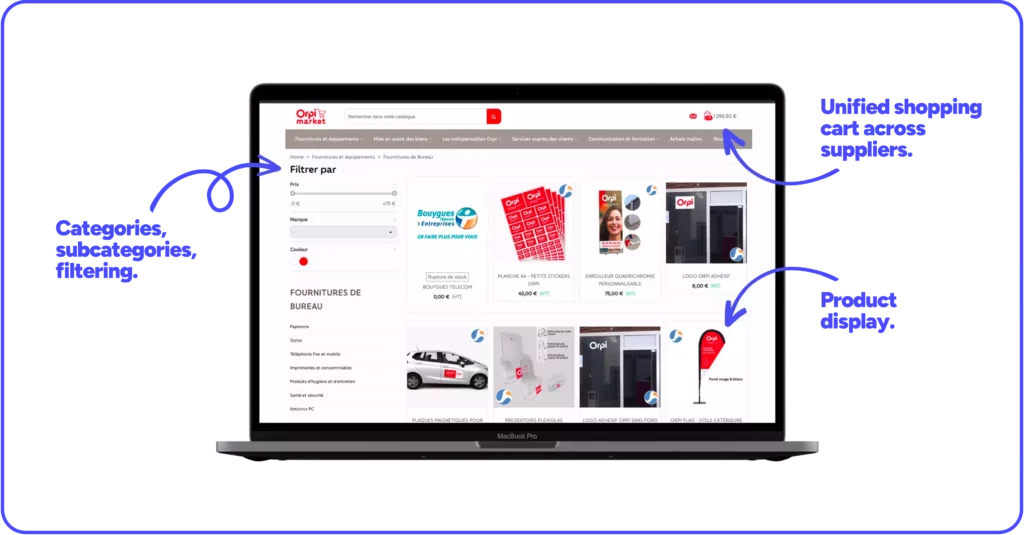
Origami Marketplace helped the Orpi network centralize its franchisees’ orders on a single platform, Orpi Market. Suppliers were integrated through a personalized onboarding process that simplified their setup, and the result was streamlined ordering, simplified payments, and better logistics management across the entire network. Learn more about this use case.
Steps to launch a B2B e-procurement platform
Needs analysis. Start by analyzing the specific needs of your buyers. Which products and services are essential? What are the current pain points in the buying process? This analysis defines the key features your platform actually needs, rather than the ones that sound good in a vendor demo.
Supplier selection. Identify and select reliable, competitive suppliers who are willing to participate in your platform and can meet your organization’s requirements.
Platform development. Choose a technology solution built for this, such as Origami Marketplace, and make sure it stays intuitive for every type of user, buyers and suppliers alike.
Training and support. Train your teams and buyers on the new interface. Personalized support during the transition makes the difference between a platform people tolerate and one they actually use.
FAQ
B2B procurement involves multiple stakeholders (purchasing, finance, sometimes warehouse teams), approval workflows, negotiated contract pricing, and recurring orders. B2C purchasing is a single buyer making a single decision. A B2B procurement platform is built specifically to handle that added complexity: approval chains, role-based access, and contract-specific pricing.
An ERP module is usually enough if you buy from a small, stable list of suppliers and your process rarely changes. Once you manage more than a handful of suppliers, need buyers to compare options, or want suppliers to manage their own catalogs, a dedicated procurement platform typically pays for itself in reduced admin time alone.
Focus on supplier onboarding (can suppliers manage their own catalogs without your team’s help?), integration with your existing ERP and accounting systems, and how configurable the approval workflows are without custom development. A platform that requires a developer every time you want to change a workflow will slow you down more than the manual process it replaced.
Conclusion
Moving to an e-procurement platform doesn’t just digitize your existing process, it changes what centralized purchasing can offer your organization: more supplier choice, more transparency, and considerably less manual work on your side. If you’re weighing whether the switch is worth it for your network, we’re happy to talk through what it would actually look like for your specific setup.
Do you want to build an agile and future-proof platform?
Let’s discuss it. our expertise extends beyond the tool as we help you structure your project with the right methodology to guarantee its success.