Tail Spend Management: Measure and Reduce Maverick Spend
Alexandre Duquenoy
Estimated reading time: 14 minutes
A technician needs ink cartridges. The approved supplier’s catalog is nowhere to be found, and the purchase request takes a week to get approved. So they order from a consumer website with their own card and file the cost as an expense. Multiply that scene by a few hundred employees: that is your maverick spend.
One by one, these purchases are small. Together, they make up your tail spend, the long tail of spending: many suppliers, many invoices, little volume each and almost no contracts. Procurement teams know it, but few deal with it: only 4% of companies actively manage the majority of their tail spend, according to a study by The Hackett Group.
This article gives the definitions, the metrics to measure the problem in your organization, then the levers to reduce it, from the simplest to the most structural.
Maverick buying, maverick spend, tail spend: the definitions
Maverick buying means purchases made outside the channels approved by the company: with no contract, from a supplier that is not approved, or without going through the ordering process. Tail spend is the part of spending scattered across many small suppliers and small orders. The two often overlap, but they are not the same thing.
Term
What it is
Example
Maverick buying
Purchases made off contract, outside approved suppliers or outside the process. The term describes a way of buying.
An order on a consumer website, paid by card and then filed as an expense
Maverick spend
The amount spent through maverick buying.
A department subscribing to an online software tool on its own
Tail spend (the long tail of spending)
The share of spending spread across many suppliers and small orders, with little contract coverage. The term describes a segment of spending.
600 suppliers that each receive less than $2,000 a year
Estimates vary by source: from 5 to 20% of spending, for most of the suppliers and orders. Only your own supplier file gives the real figure.
The difference matters when you act. A tail spend purchase can be fully compliant (a small approved supplier, with a contract). A maverick purchase can be large (software bought without going through procurement). In both cases, they are mostly indirect, low-value purchases: supplies, small equipment, maintenance, one-off services. See our guide to indirect spend and C-class purchasing.
Why purchases slip outside contracts
Maverick buying is rarely bad faith. It is the shortest path for someone with a need and little time. The reasons are always the same:
“I can’t find the product.” The negotiated catalog is a PDF, a spreadsheet or the website of one supplier out of ten.
“Approval takes a week.” The workflow designed for a $50,000 purchase applies to a $40 purchase.
“It’s urgent.” A breakdown, a job site, a customer waiting.
“The approved supplier doesn’t have what I need.” The contract only covers part of the need.
“I didn’t know there was a contract.” Agreements exist, but nobody sees them at the moment of buying.
In other words, maverick spend measures the gap between the intended process and how easy it is to buy elsewhere.
What maverick spend costs
The cost does not show in the price of a single purchase. It adds up in four places:
Lost discounts. An off-contract purchase is paid at list price. According to the Hackett study, companies currently save 7 to 10% on their tail spend, and believe 16 to 20% is possible.
Processing cost. Each new supplier means a new vendor account, invoices to match and payments to track, for a few hundred dollars of purchases.
Risk. A supplier chosen in a hurry has not been vetted: compliance, insurance, ESG criteria.
Visibility. What procurement cannot see, it can neither negotiate nor consolidate.
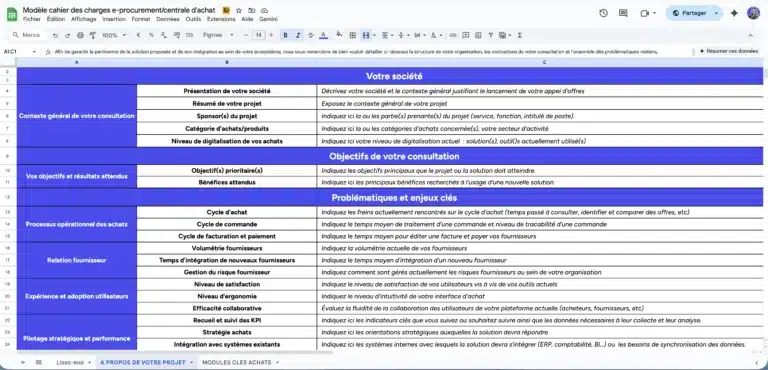
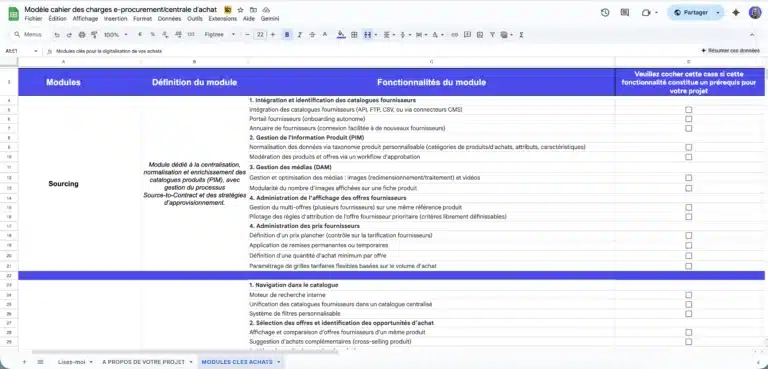
Need a sample requirements document?
A ready-to-use template to quickly frame your multi-vendor or multi-supplier platform project, compare market solutions and secure your project.
Twelve months of invoices are enough for a first measurement. You don’t need a dedicated tool: an accounts payable export and a spreadsheet will do.
The four metrics
Metric
Calculation
What it shows
Off-contract spend rate
Off-contract spend ÷ addressable spend × 100
The share of spending that escapes negotiated agreements
Supplier concentration
Number of suppliers that make up 80% of spend, compared with the total number
How long your long tail is
Suppliers below a threshold
Number of suppliers below $5,000 a year (threshold to adjust)
The number of accounts to create, monitor and pay for little spend
Adoption rate of the intended channel
Orders placed through the catalog or platform ÷ total orders
Whether the official channel is really used
To benchmark your rate: APQC reports a median of 1.6% unmanaged spend across 282 organizations that measure it. A low rate can also mean the measurement misses part of the spending, often expenses.
The five-step method:
Extract twelve months of supplier invoices: supplier, amount, date, cost center, category.
Rank suppliers by descending spend and calculate the running total. Those after 80% of the total form the long tail.
Match against the list of contracts and approved suppliers. Anything not on it is off contract.
Add expense reports and card payments. A good share of maverick spend never shows up in accounts payable.
Segment by category and department to choose where to act first: frequent categories that are easy to catalog come first.
To track these figures over time alongside the rest of procurement performance: our procurement KPIs.
Six levers to reduce maverick spend
The rule is simple: the intended way to buy must become faster than maverick buying. Banning without simplifying just pushes the problem into expense reports.
Lever
Effort
When to use it
1. Make contracts visible
Low
Agreements exist but nobody finds them at the moment of buying
2. Adjust approval thresholds
Low
The same workflow applies to $40 and to $40,000
3. Control purchasing cards
Medium
Many one-off purchases end up in expense reports
4. Reduce the number of suppliers
Medium
Hundreds of suppliers for a few hundred dollars each
5. Connect major suppliers via punchout
Medium
Three or four connected suppliers carry most of the spend
6. Open an internal multi-supplier catalog
Higher
The negotiated offer is scattered across many suppliers and many buyers
Make contracts visible. Publish the list of approved suppliers, what they cover and how to order, where teams already look.
Adjust approval thresholds. A budget per department and approval above a set amount are enough for small recurring purchases. See our guide to purchase approval workflows.
Control purchasing cards. Limits, authorized categories and receipts captured at the source: the spend stays occasional, but it becomes visible. See purchasing cards in B2B.
Reduce the number of suppliers. Consolidate the long tail on a few general suppliers, or hand it over to a service provider.
Connect major suppliers via punchout. Buyers order on the supplier’s site at contract prices, from your procurement tool. Effective with a few suppliers, cumbersome beyond that: punchout explained.
Open an internal multi-supplier catalog. The whole negotiated offer in a single catalog, with a single cart and your approval rules: teams find the right product at the right price faster than anywhere else. For a network headquarters, this catalog becomes an online group purchasing platform, open to members with their negotiated prices.
What is the difference between maverick spend and tail spend?
Maverick spend describes a way of buying: off contract or outside the process. Tail spend describes a segment of spending: the many small suppliers and small orders. A large part of tail spend is bought the maverick way, but not all of it.
How do you calculate the off-contract spend rate?
Divide off-contract spend by addressable spend, then multiply by 100. Include expense reports and card payments, otherwise the rate will be underestimated.
Should off-contract purchases be banned?
No. A ban without a simpler option pushes purchases into expense reports. It is better to make the intended way to buy faster, and keep a controlled card for real emergencies.
Does tail spend only affect large companies?
No. It appears as soon as several departments, sites or stores each buy on their own. In a network of franchisees or branches, it takes the form of local purchases outside the network’s suppliers.
Does an internal multi-supplier catalog replace the ERP or the procurement suite?
No. It connects to them: the ERP keeps accounting and invoices, the procurement suite keeps approval workflows, and the catalog brings the negotiated offer into one place.
Conclusion: make the intended purchase easier than the maverick one
Maverick spend does not go away with a memo. It recedes when the negotiated offer becomes the easiest to find and to order. Start by measuring over twelve months, pick two or three frequent categories, then apply the lever that fits your situation.