HomeBlogB2B e-procurement platformBest PracticePurchasing Cards in B2B: How they work and why they matter
Purchasing Cards in B2B: How they work and why they matter
The purchasing card has existed since the 1990s in public procurement and large enterprises. Yet […]
Purchasing Cards in B2B: How they work and why they matter
- Arnaud
- Estimated reading time: 14 minutes
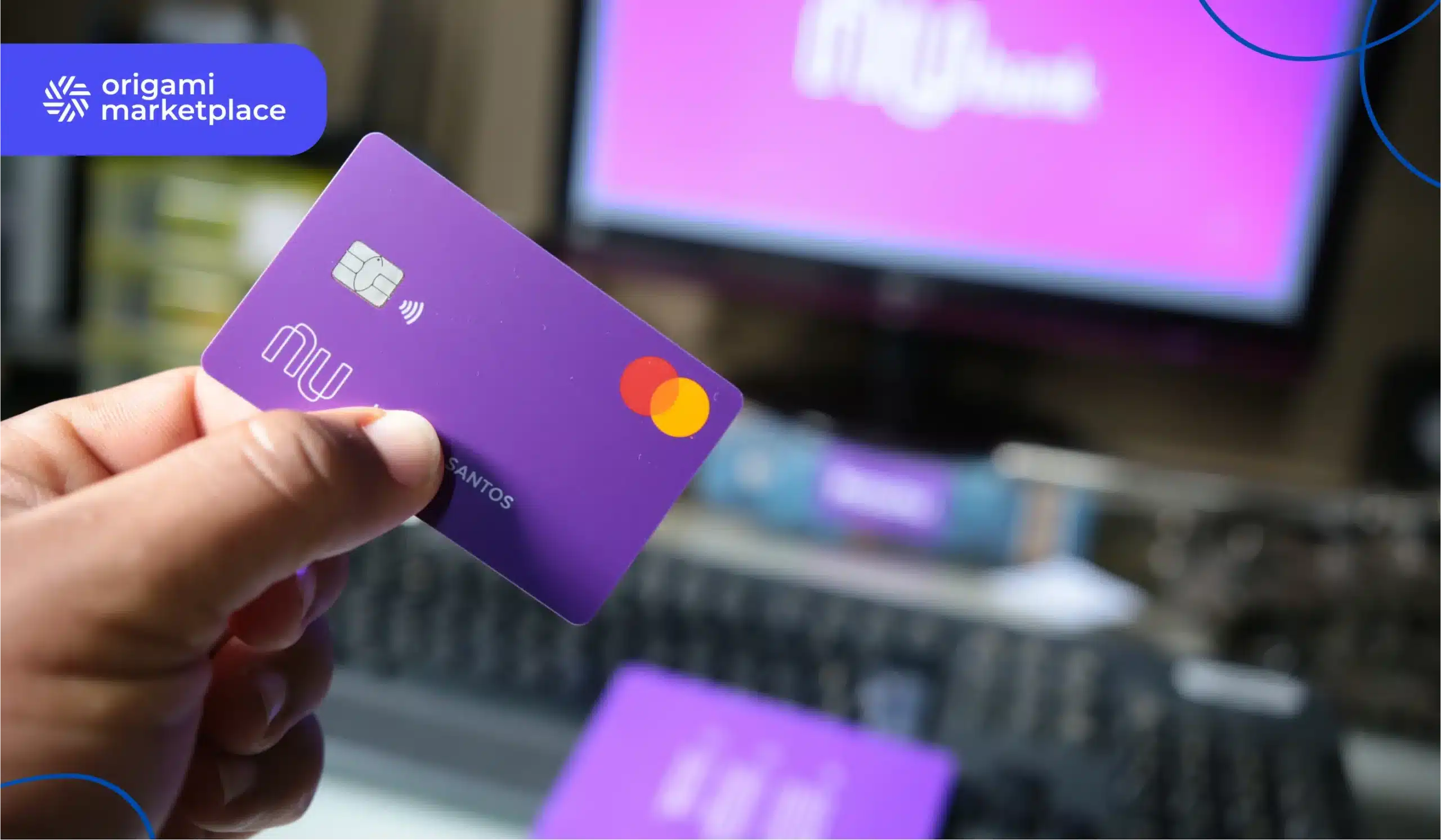
The purchasing card has existed since the 1990s in public procurement and large enterprises. Yet many procurement managers in mid-caps and SMEs only have a vague idea of what it is, how it works and what it can do for them.
That is unfortunate, because the purchasing card solves a problem every procurement team knows: the absurd cost of processing small orders. A EUR 35 office supply purchase order that runs through the full circuit (purchase requisition, manager approval, ERP entry, PO issuance, goods receipt, invoice matching, payment) costs between EUR 50 and EUR 150 in processing. The order costs more to process than to buy.
The purchasing card short-circuits this process. The buyer orders, pays, and the data flows automatically into accounting. No purchase order. No supplier invoice to match. All within a framework controlled by the procurement team (limits, authorised categories, restricted suppliers).
This guide covers how purchasing cards work, their technical mechanics, their use cases and how they fit into multi-supplier procurement platforms.
Table of contents:
1. What is a purchasing card?
A purchasing card is a professional payment card, issued in the company’s name (not the employee’s), used to settle purchases of goods and services within a framework defined by the procurement team.
What distinguishes it from a standard payment card
Physically, it looks like any Visa or Mastercard. It works on the same terminals, the same online payment gateways. But under the surface, everything is different:
- The cardholder is not the payer. The card is assigned to an individual employee (a site manager, an operational buyer, a public sector agent), but the company pays. Transactions are consolidated on a single statement sent to the organisation, not the cardholder.
- Limits are set by the organisation. The procurement team defines a per-transaction limit (e.g. EUR 500), a monthly limit (e.g. EUR 3,000) and optionally a maximum number of daily transactions. The cardholder cannot exceed these limits.
- Spending categories are filtered. Using Merchant Category Codes (MCC), the organisation can authorise or block certain merchant categories. A cardholder authorised to buy office supplies cannot use their card at a restaurant or petrol station.
- The data transmitted goes far beyond the amount. This is the fundamental difference. A purchasing card can transmit line-item detail for each transaction: product references, quantities, unit prices, VAT, cost centre codes. More on this in section 3.
Purchasing card, corporate card, virtual card: do not confuse
The confusion is common, even among procurement professionals.
| Card type | Usage | Who holds it | Billing |
|---|---|---|---|
| 🛒Purchasing card (p-card) | Professional goods and services purchases | Operational buyer, public sector agent | Centralised on a company statement |
| ✈️Corporate card | Travel and entertainment expenses | Any travelling employee | Centralised or individual per policy |
| 💻Virtual card | One-off purchase, subscription, online payment | No physical holder, single-use number | Per transaction |
| 🏢Lodge card | Centralised payment (travel, fleets) | No holder, linked to a department | Centralised on an account |
The purchasing card is the one relevant for recurring purchases of goods and services. The others have their uses but address different needs.
2. How a purchasing card works in practice
A concrete example. Sarah is a facilities manager at a 500-person mid-cap. She needs 200 pairs of protective gloves and 50 respirator filter cartridges.
Without a purchasing card:
- Sarah creates a purchase requisition in the ERP.
- Her manager approves it (2 days).
- The procurement team issues a purchase order to the supplier.
- The supplier delivers and sends an invoice.
- Accounting matches the invoice to the PO and the delivery note.
- Payment is issued at 30 or 60 days.
With a purchasing card:
- Sarah orders from the supplier (or on a marketplace) and pays with her purchasing card.
- The transaction is automatically recorded with product data.
- The monthly statement arrives at accounting, pre-coded.
- The supplier is paid within 2 to 5 days.
The circuit shrinks from 6 steps and 2-8 weeks to 2 steps and a few days. Processing cost collapses. The supplier gets paid faster (which strengthens your negotiating position).
The ecosystem actors
Four parties are involved in a purchasing card transaction:
- The issuer (the buyer’s bank): issues the card, sets limits, consolidates statements.
- The cardholder (the employee): uses the card to settle purchases within the defined framework.
- The acquirer (the supplier’s bank): processes the payment on the seller side.
- The network (Visa or Mastercard): ensures interoperability between issuer and acquirer.
For the supplier (or marketplace), accepting a purchasing card is equivalent to accepting a standard card payment, with one technical nuance: the transmission of enhanced data (levels 2 and 3).
Ensure nothing is overlooked in your project specifications
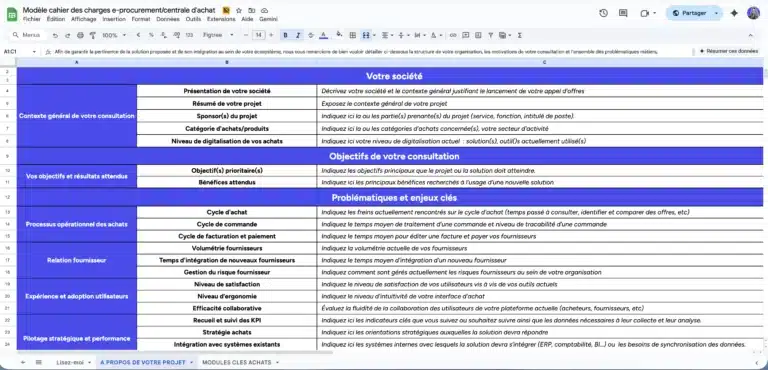
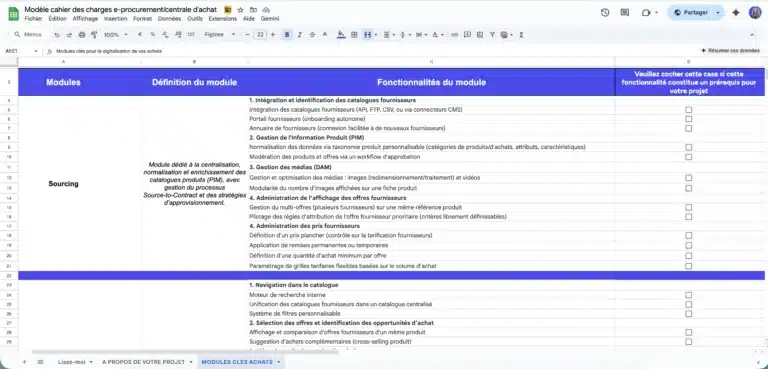
A ready-to-use template to quickly frame your e-procurement or purchasing group project, compare market solutions, and secure your vendor consultation process.
Comprehensive model used in B2C, B2B or C2C projects and ready to adapt.
3. The 3 data levels: what makes the purchasing card unique
This is where the purchasing card truly sets itself apart from a standard payment card. Visa and Mastercard have defined three levels of data that suppliers can transmit during a purchasing card transaction.
Level 1: the minimum (identical to a standard card)
Data transmitted: total amount, transaction date, merchant name.
This is what any payment card transmits. No added value for professional purchasing. Unusable for procurement traceability.
Level 2: accounting data
Data transmitted: level 1 + net amount, VAT rate and amount, order or customer reference number, supplier postcode.
This level suffices for standard B2B purchases. It enables automatic accounting allocation and reduces data entry work. It is the minimum expected by most mid-caps.
Level 3: line-item detail
Data transmitted: level 2 + for each order line: product reference, description, quantity, net unit price, cost centre code, budget code, contract number (public sector).
This is the gold standard of the purchasing card. Level 3 enables:
- Automatic reconciliation with the budget by line item and cost centre.
- Granular procurement reporting (which entity purchased what, from whom, at what price).
- Compliance with public procurement requirements.
- Direct feeding of procurement performance indicators.
Level 3 is virtually mandatory for public contracts and increasingly requested by large private enterprises. It is also the most technically demanding level: the supplier must structure and transmit this data with every transaction via their PSP.
4. Purchasing cards vs other B2B payment methods
The purchasing card does not replace every other payment method. It sits within a B2B payment mix, each method having its optimal domain.
| Payment method | Optimal use case | Supplier payment time | Buyer processing cost | Data richness |
|---|---|---|---|---|
| 💳Purchasing card | Recurring purchases < EUR 5,000, class C, public contracts | T+2 to T+5 | Very low | Level 3 (line-item) |
| 🏦Bank transfer | Strategic purchases, large amounts | T+1 to T+3 | Medium | Low (free-text reference) |
| 🔄SEPA direct debit | Subscriptions, contractualised recurring orders | Variable | Low | Low |
| ⏳Deferred payment / BNPL | B2B purchases requiring cash flow management | 30 to 90 days | Variable | Medium |
| 📄Purchase order + invoice | Strategic purchases, framework contracts | 30 to 60 days | High (EUR 50-150 per PO) | Complete (but manual) |
The purchasing card is unbeatable for class C purchases: supplies, consumables, PPE, small maintenance, recurring services. These are purchases with low unit value but high transaction volume, where processing cost absorbs a disproportionate share of the purchase value.
For strategic purchases (heavy equipment, raw materials, framework contracts), the traditional PO/invoice/transfer circuit remains more appropriate, with the corresponding approval workflows.
5. Who uses purchasing cards (and for which purchases)
- Public sector: Government departments, local authorities, hospitals and universities use purchasing cards to simplify the execution of public procurement contracts for routine supplies. For a supplier wanting to work with the public sector via a marketplace, accepting purchasing cards (with level 3 data pass-through) is often an eligibility condition in tenders. Not accepting them means disqualification before the technical offer is even evaluated.
- Large enterprises: Enterprise procurement teams deploy purchasing cards to delegate operational purchasing to sites while retaining control. A site manager or workshop supervisor orders directly what they need, within the limits defined by the procurement policy (limits, approved suppliers, categories). The procurement team retains visibility via consolidated statements and level 3 data. This is exactly the model that a group purchasing organisation or an e-procurement platform reproduces: local entity autonomy, group control.
- Mid-caps: Mid-sized companies are the segment where purchasing card adoption is growing fastest. Visa, Mastercard and American Express all reported double-digit growth in virtual commercial cards in 2025 (Mordor Intelligence). For a mid-cap managing 50 class C suppliers with paper purchase orders, switching to purchasing cards reduces processing cost by 60 to 80%. When that purchasing card is used on a multi-supplier platform that centralises the catalogue, the gain is even greater.
Purchases typically settled by purchasing card
- Office supplies and consumables.
- PPE (personal protective equipment).
- Small maintenance and tooling.
- Recurring services (cleaning, temporary staffing, catering).
- IT purchases under EUR 5,000 (licences, accessories, consumables).
- Events and marketing expenses.
The common denominator: repetitive purchases, low to medium value, from multiple suppliers. Classic class C procurement.
6. Purchasing cards and multi-supplier platforms: the full picture
The purchasing card alone has a limitation: it simplifies payment, but not sourcing. The buyer still needs to know which supplier to order from, compare prices, manage multiple e-commerce sites or make phone calls. The purchasing card reduces the payment processing cost, but not the overall purchasing process cost.
The multi-supplier platform as an accelerator
When the purchasing card is coupled with a B2B marketplace or a digital group purchasing organisation, the gain is complete:
- A single catalogue with all the group’s approved suppliers. The operational buyer no longer needs to know which supplier to contact: they search for the product, find it, order it.
- A single multi-supplier basket. The buyer orders from 3 different sellers in one operation and pays in a single purchasing card transaction.
- Level 3 data structured natively. The marketplace already knows the product references, quantities, unit prices and sellers for each line. This data is transmitted automatically to the card network, with no manual entry.
- Centralised control. The procurement team defines approval workflows, limits and authorised catalogues. The operational buyer is autonomous within a controlled framework.
- Consolidated reporting. Transaction data feeds directly into procurement indicators: spend by entity, by category, by supplier.
It is the combination of purchasing card + multi-supplier platform that delivers maximum value. The purchasing card without the platform reduces payment cost. The platform without the purchasing card reduces sourcing cost. Together, they reduce the total cost of the purchasing process.
What this means for a group or a franchise network
A group with 20 subsidiaries, 150 class C suppliers and thousands of orders per month can centralise everything on an internal marketplace with purchasing card payment. Each site manager orders autonomously, from the group catalogue, with their capped purchasing card. The procurement team has real-time visibility over all spending.
The same model works for a franchise network: the franchisor operates the distribution platform, franchisees order with their purchasing cards, the network benefits from negotiated terms.
Conclusion
The purchasing card reaches its full potential when integrated into a centralised procurement platform. Whether you want to build a B2B marketplace for your ecosystem, digitise your group purchasing organisation or deploy an e-procurement solution for your group, our experts can help you choose the right B2B payment methods for your context.
Let's talk about your project.
Let’s discuss it. our expertise extends beyond the tool as we help you structure your project with the right methodology to guarantee its success.

Not universally, but increasingly so. In public procurement tenders for routine supplies, the purchasing card is often listed as a preferred or mandatory payment execution method. Not accepting it can disqualify a supplier from certain tenders, particularly those from government departments and large local authorities.
The card network commission (Visa/Mastercard) sits between 0.3% and 1.5% for commercial cards in Europe, capped by interchange regulation. PSP fees are additional. In B2B, these costs are generally lower than the processing cost of a traditional purchase order, making it cost-effective for the supplier too.
No. The purchasing card is a payment method, not a contractual document. In public procurement, the contract (or purchase order) remains the legal framework. The purchasing card simplifies financial execution but does not remove the need for the contractual framework. For class C purchases below threshold, however, it can replace the full PO/invoice/payment circuit.
No. Enhanced data processing at levels 2 and 3 is a specific capability that only certain PSPs offer. Verify with your payment provider before committing. B2B-specialised or marketplace-focused PSPs are better positioned than consumer-grade providers.
On a marketplace, a single order can contain products from multiple sellers. The purchasing card payment is processed as one transaction, but level 3 data details the line items per seller. The PSP handles split payment (fund distribution between sellers and operator). The operator deducts their commission from the amount disbursed to each seller.
Yes. The two are complementary. The purchasing card handles payment; e-invoicing handles invoice issuance and transmission. Both coexist: the supplier issues a compliant electronic invoice AND accepts purchasing card payment. Level 3 purchasing card data actually facilitates reconciliation with the electronic invoice.