HomeBlogB2C online marketplaceBusiness modelHow to build a marketplace? The A-to-Z guide 📙
How to build a marketplace? The A-to-Z guide 📙
Building a marketplace is a real opportunity: you connect sellers and buyers without carrying inventory […]
How to build a marketplace? The A-to-Z guide 📙
- Arnaud
- 10 minutes reading
Building a marketplace is a real opportunity: you connect sellers and buyers without carrying inventory yourself. The scale of the opportunity is measurable, too. According to Digital Commerce 360’s Global Online Marketplaces Database, the top 100 online marketplaces worldwide generated $3.832 trillion in Gross Merchandise Value in 2024, up from $2.670 trillion in 2020 (Digital Commerce 360), a real and growing trend rather than a projection.
This guide covers what a marketplace is, the different types, and the concrete steps to plan, build, and launch one, including the technical, legal, and marketing decisions along the way.
1. What is a marketplace?
A marketplace is an online platform that connects sellers and buyers to facilitate transactions. Unlike a traditional e-commerce store, where a single business sells its own products, a marketplace lets multiple independent sellers offer products or services on the same platform. Buyers get a wider range of products and prices, and sellers get access to an audience without having to build and market their own site.
Beyond connecting the two sides, most marketplaces also handle payments, logistics support, and customer service, providing a secure, consistent framework for transactions. Amazon, Etsy, and Vinted are all recognizable examples, each with a different audience and category but the same underlying model.
The value of a marketplace grows with its network: more sellers attract more buyers, and more buyers attract more sellers. Understanding that dynamic is the starting point for everything else in this guide.
Types of marketplaces
- B2B: businesses selling to businesses, for industrial products, specialized services, or strategic partnerships.
- B2C: businesses selling directly to consumers. Amazon and eBay are the standard references here.
- C2C: individuals selling to individuals, usually built around ratings and reviews to establish trust, as with Vinted.
- B2B2C: a supplier partners with an intermediary (a marketplace or retailer) that handles the consumer-facing sale, so the supplier gets the intermediary’s reach and logistics while keeping its own brand.
- C2B2C: consumers contribute the supply (goods, content, or ideas) that a company then curates and resells to other consumers, the model behind platforms like Back Market.
- Service marketplaces: connecting freelancers, consultants, or artisans with clients, again relying heavily on ratings to establish trust.
Some platforms combine models, for instance selling their own inventory alongside third-party sellers. The type you choose shapes almost every other decision: interface design, logistics needs, and payment complexity all follow from it, so it’s worth deciding deliberately rather than by default.
Before you get started, analyze demand and competition. A well-targeted model (B2B, B2C, C2C, services) will do more for engagement and profitability than a broad, undifferentiated one. If you're going niche, make sure there's real growth potential and enough buyers and sellers to sustain the platform.

Alexandre Duquenoy
→ Talk to our expert
2. Marketplace vs. traditional e-commerce
The core difference comes down to how many parties are involved in each transaction.
In a standard online store, one merchant controls the entire chain: stock, pricing, shipping, and after-sales service. That gives full control over quality and experience, but limits the catalog to whatever that one business carries.
A marketplace instead brings multiple independent sellers onto one platform. The operator’s job shifts to providing the technical infrastructure, secure payments, and legal compliance across all of them. That opens up a much wider catalog and audience, but introduces real complexity: dispute resolution, consistency of experience across sellers, and quality control on listings you don’t directly control.
Download our free marketplace specifications template.
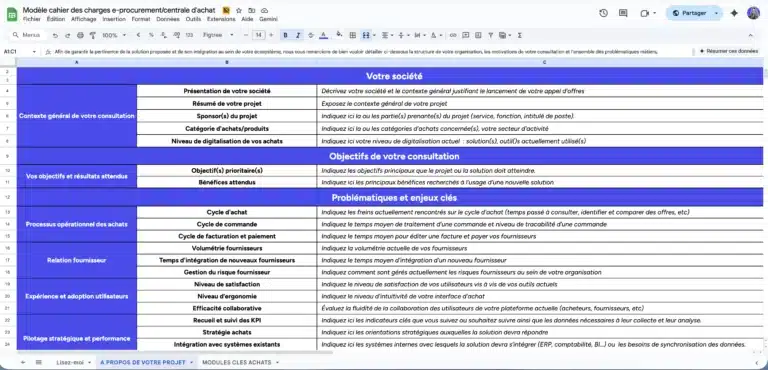
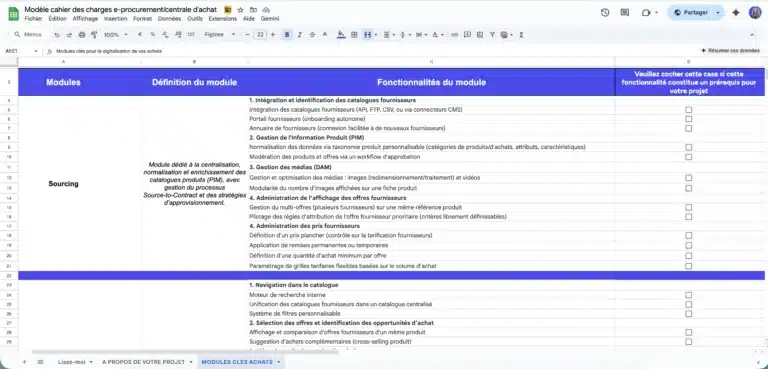
A ready-to-use template to quickly frame your e-procurement or purchasing group project, compare market solutions, and secure your vendor consultation process.
Comprehensive model used in B2C, B2B or C2C projects and ready to adapt.
3. How to build a marketplace, step by step
Conduct market research
Understand the sector, identify unmet needs, and study your competitors before building anything. Look at purchasing behavior and consumption trends, not just who else is already in the space. This is also when you should build out buyer and seller personas, since they’ll shape which features actually matter for your platform. Budget time and resources for this phase properly. It’s the foundation for your business plan and financial projections, not a formality before the “real” work starts.
Define your concept
Decide whether you’re positioning for a broad, general market or a specific niche. A niche lets you focus marketing spend and offer something genuinely differentiated to a defined audience, rather than competing broadly against better-funded generalists. Your concept should cover what you’re offering, your actual point of difference from existing options, and how buyers and sellers will create value for each other on your platform specifically.
Determine your persona
Define concrete profiles for both sides. Buyers care about navigation, security, and product quality. Sellers care about the tools they get, the effort required to join, and what would actually convince them to list on your platform over an established competitor. Base these on real surveys and interviews where you can, not assumptions, since this is what will guide your interface decisions and customer journeys later.
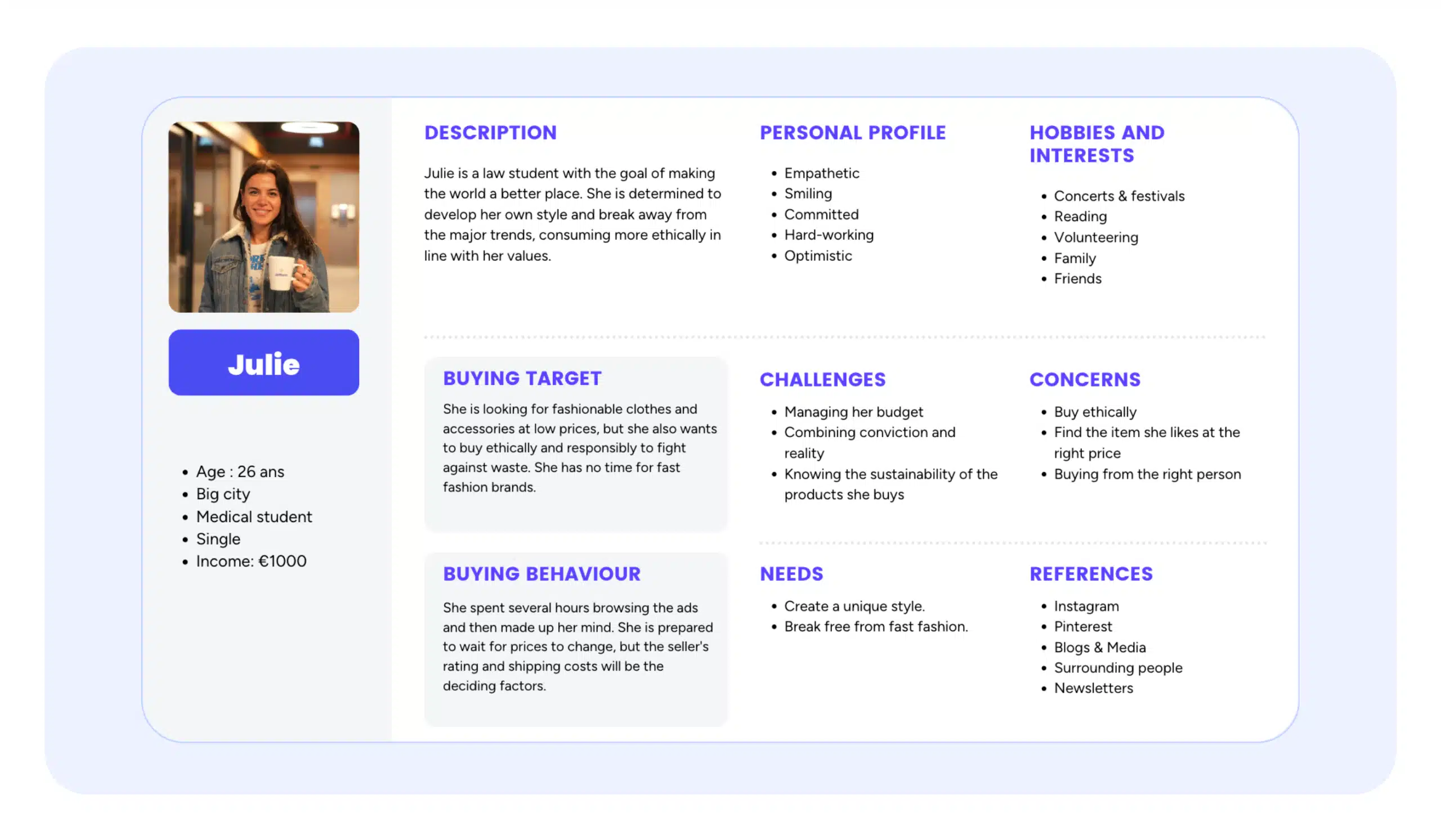
To support you in this key step of building your marketplace, download our free template to help you draft your personas.
Choose a business model
Your main options: sales commission (you earn only on completed transactions, but pricing needs to stay competitive), subscriptions (recurring revenue, but a real barrier for price-sensitive sellers), and listing or registration fees (simple to understand, but can deter sellers before they’ve made a single sale). Many marketplaces end up combining more than one, which is usually the right instinct rather than a compromise.
Choose your technology: SaaS, on-premise, or open source
- SaaS: fast to launch, low upfront cost, hosting and updates included. The tradeoff is that you don’t own the underlying platform.
- On-premise: full control and customization, no recurring license fees, but a real upfront investment and the need for in-house technical capacity to maintain it.
- Open source (WordPress or PrestaShop with multi-vendor plugins, for example): the cheapest way to test an idea, but you’ll hit real limits on user experience, performance, and scalability as you grow, often requiring a rebuild rather than an upgrade.
SaaS suits a fast launch, on-premise suits full control, and open source suits testing on a budget. See our full comparison of the three models for more detail.
Set up your payment system
A marketplace transaction involves three parties, buyer, seller, and you as the operator, which is more complex than a standard e-commerce checkout.
You’ll need a payment setup that can split funds automatically between you and each seller, handle KYC checks, and support multiple currencies if you’re operating across borders. Marketplace-specific providers like Stripe Connect, MangoPay, and Lemon Way are built for exactly this, as opposed to a standard merchant payment account. Compare transaction fees and support quality carefully. Both affect your margins and your sellers’ trust directly.
Understand the legal framework
You’ll need clear Terms and Conditions covering payment and commission terms, dispute resolution and returns, and data protection under GDPR if you’re operating in Europe. You’ll also need to handle tax obligations (VAT, accounting) and intellectual property questions around the products or services sold. Getting a lawyer who specializes in this early is usually cheaper than fixing contractual gaps after you’ve launched.
Define your budget
Account for platform design and development, hosting and maintenance (particularly if you’ve chosen on-premise or open source), marketing, and legal and administrative setup costs. As a reference point, custom marketplace development can run from around €35,000 to over €150,000 for a solid MVP, depending on scope and complexity. Get a real estimate before you fundraise or commit spend, not after.
Recruit your first sellers
No marketplace survives without sellers worth buying from. Build a clear pitch covering what you offer them (commission terms, visibility, marketing support), target sellers who genuinely fit your niche rather than anyone willing to sign up, and check their reputation and reliability before onboarding. Seller quality is what determines whether your marketplace feels credible on day one.
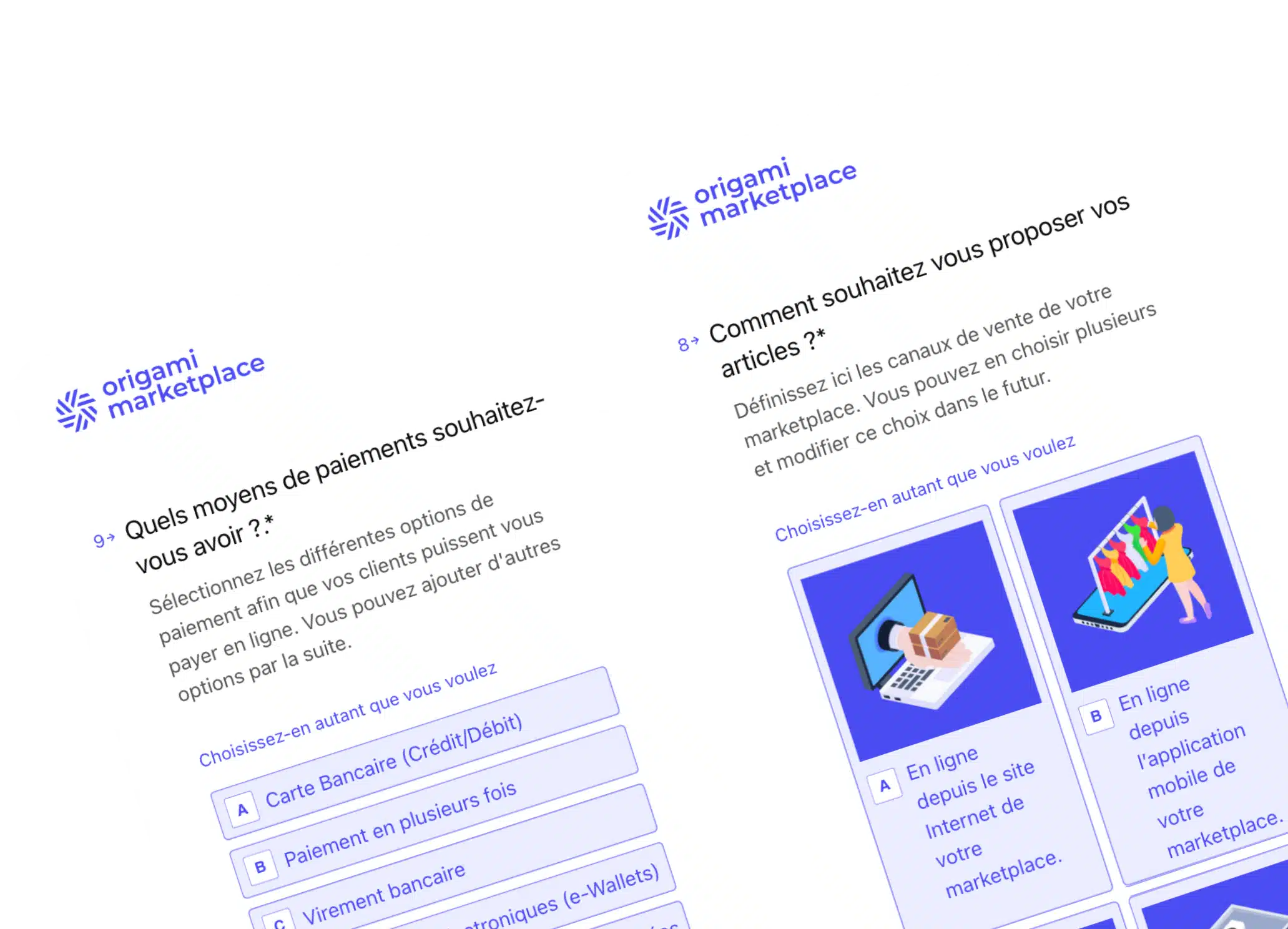
Ensure your success today. Take advantage of our free configurator to define the outline of your project and discuss it with one of our experts for a personalized study.
4. Prepare your launch
Plan the launch itself deliberately: a schedule, a clear marketing message, and the right channels for your audience (social, email, partnerships, targeted ads). Early-user promotions, live demos, and launch events all help build initial momentum. Track performance from day one so you can adjust quickly rather than waiting for a quarterly review to notice what isn’t working.
5. Marketing strategy and post-launch follow-up
SEO and paid acquisition (Google Ads, Meta, TikTok, LinkedIn depending on your audience) both matter, but so does content that actually helps people evaluate whether your marketplace is right for them, not just content built to rank. Track conversion rate, sign-ups, transaction frequency, and satisfaction after launch, and use that data to find what’s actually broken rather than guessing.
Retention matters as much as acquisition. Reviews, ratings, and loyalty programs all help keep both sides coming back once the initial launch push fades.
Invest in SEO for durable, compounding traffic, and use paid ads (Google, Meta, TikTok) for a faster initial start. Build a real content strategy (articles, videos, testimonials, not just volume), reward your first users to keep them engaged, and track performance closely enough to actually act on what you find.

Antoine Mantel
→ Talk to our expert
Launching a marketplace is a genuinely ambitious project, but every step in this guide, from choosing your model to your marketing plan, is a decision you can make deliberately rather than by default. If you want to talk through your specific project, our team can walk you through it, no obligation.
Frequently asked questions:
An all-in-one platform for building and running a multi-vendor site: it automates seller and buyer management, gets regular security and feature updates, and typically comes with dedicated support, so you’re not building and maintaining core infrastructure yourself.
Yes, either a fully custom front-end or a pre-built template, developed with partner agencies, and you’re also free to build your own or bring in a developer of your choice.
Pricing is a monthly subscription scaled to your needs, including support and regular updates. Book a call for a quote tailored to your project.
See the full feature and integration list. The architecture supports a wide range of integrations beyond what’s listed by default.
B2B, major B2C brands, and C2C platforms focused on the circular economy are all active use cases today.
Yes, a free template covering the core functionality most marketplaces need, meant as a starting point you adapt to your specific project.
It’s a headless, API-first solution adaptable across B2B, B2C, C2C, and C2B2C models, built to connect with a wide range of technical partners rather than locking you into one stack.
You centralize supply from multiple sellers and earn commission on each sale, delegate stock and shipping to the sellers themselves, expand your catalog without owning more inventory, and automate the operational work (listings, pricing, orders) that would otherwise scale headcount alongside growth.
Yes, free. Schedule one here.
Do you want to build an agile and future-proof platform?
Let’s discuss it. our expertise extends beyond the tool as we help you structure your project with the right methodology to guarantee its success.