HomeBlogB2B e-procurement platformB2C online marketplaceC2C platformsBuilding a multi-vendor marketplace in 8 steps
Building a multi-vendor marketplace in 8 steps
The rise of multi-vendor marketplaces has changed online commerce, giving customers easy access to a […]
Building a multi-vendor marketplace in 8 steps
- Julien Bruitte
- 8 min read
The rise of multi-vendor marketplaces has changed online commerce, giving customers easy access to a wide range of suppliers in one place. Are you drawn to this model and planning to build your own multi-vendor marketplace? Here are the 8 essential steps to get your project off the ground.
1. Have an idea
Every project starts with an idea, and it can turn into real success once it’s given the resources to make it happen. From there, set clear goals for your marketplace: think about an unmet need in the current market, or an innovative way to bring suppliers and buyers together.
- Jeff Bezos launched Amazon in July 1995 positioning it as the world’s largest bookstore, not because he personally couldn’t find books locally, but because books were uniquely suited to an online catalog: there were more titles in print than any physical store could ever stock on its shelves, which made an unlimited online selection a genuine advantage over brick-and-mortar retail.
- Milda Mitkutė came up with the idea for Vinted in 2008, together with co-founder Justas Janauskas, because she wanted an easy way to sell clothes she no longer needed.
And on Origami Marketplace itself, Camille Traverse, a competitive rider, started Preppy Sport in 2014 after noticing there was no dedicated, secure way for riders to buy and sell used equestrian equipment: the platform now has more than 95,000 registered users and over 40,000 active listings, with 100 or more new listings posted every day (Preppy Sport case study).
The common thread: each of these founders started from a specific, personally understood gap in the market rather than a generic “marketplaces are growing” observation.

2. Develop your business plan
Having a good idea isn’t enough on its own. You need a solid business plan that includes an analysis of your target market, a marketing and sales strategy, a detailed financial plan, and a clear explanation of your business model (commission on sales, seller or buyer subscriptions, listing fees, and so on).
The scale of the wider market backs up the timing: the top 100 online marketplaces tracked globally generated $3.832 trillion in gross merchandise value in 2024, up from $2.670 trillion in 2020 (Digital Commerce 360, Global Online Marketplaces Database). That’s real, sustained growth in the model you’d be building into, even if your own marketplace will obviously capture a tiny fraction of it.
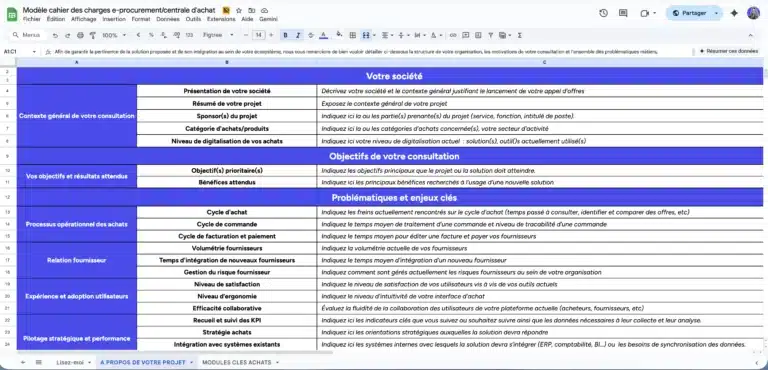
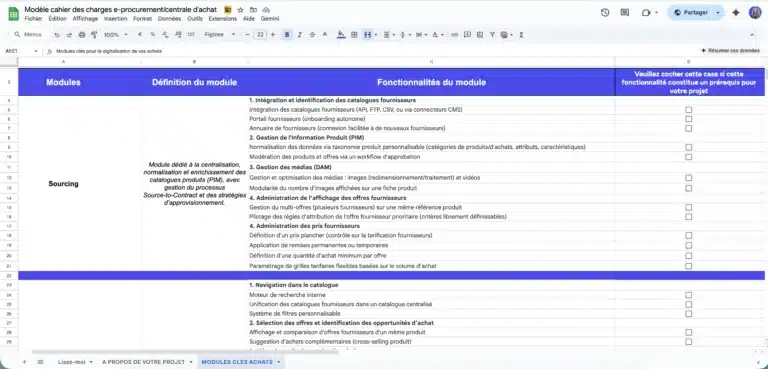
Download our free marketplace specifications template for a ready-made backlog covering the essentials for a C2C, B2C, or B2B marketplace.
Download our free marketplace specifications template.


A ready-to-use template to quickly frame your e-procurement or purchasing group project, compare market solutions, and secure your vendor consultation process.
Comprehensive model used in B2C, B2B or C2C projects and ready to adapt.
3. Create a budget
Building a multi-vendor marketplace takes financial resources, both fixed (your software subscription, hosting, payment solution) and variable (new features, marketing, communication). Budgeting these upfront gives you a clearer picture of your project and its economics.
Also plan for the people, not just the tooling: do you have someone to manage seller onboarding, disputes, or product data moderation? If not, you’ll need to grow your team, which affects your budget too.
4. Choose your marketplace solution
With so many options on the market, which one should you pick? Your choice depends on your in-house technical capacity, the features you need, and the size of your company.
There are three broad models for building a multi-vendor marketplace: Software as a Service (SaaS), on-premise, and open source, each with its own trade-offs between speed, cost, and control.
| Criterion | SaaS | Open source | On-premise / custom |
|---|---|---|---|
| Time to launch | Fastest, often a few weeks to a working MVP | Moderate, depends on developer availability | Slowest, typically several months or more |
| Upfront cost | Low (subscription-based) | Moderate (developer time to implement and configure) | Highest (full custom build) |
| Ongoing cost | Predictable subscription fee | Developer time for maintenance, updates, and hosting | Highest, an in-house or agency team to maintain |
| Technical control | Limited to what the platform exposes, though a good one covers most marketplace-specific needs out of the box | High, full access to the codebase | Full control over every part of the stack |
| Best fit for | Teams that want to validate the model fast without building or maintaining infrastructure | Technical teams with development resources who want to self-host and customize | Businesses with very specific, non-standard requirements and the budget to match |
A SaaS platform is generally the fastest way to get a working marketplace live and iterate on it, since you’re not building or maintaining core infrastructure yourself. That’s also why teams building on Origami Marketplace typically launch a working MVP in a matter of weeks rather than the many months a custom build usually takes.
It’s worth getting support early: talking through your requirements with a team that has seen many marketplace launches, like Origami Marketplace’s, can help you validate your idea and avoid costly missteps before you commit to a technical direction.
5. Choose a Payment Service Provider (PSP)
Payments work differently on a marketplace than on a normal online store. A classic e-commerce transaction involves two parties: buyer and seller. A marketplace transaction involves three: buyer, seller, and you as the platform operator, and as the operator you generally cannot collect and hold funds on behalf of your sellers yourself. That has to go through a licensed PSP built for marketplace-style split payments, such as
Stripe Connect or Adyen for Platforms, which can route each seller’s share, retain your commission, and handle the KYC (know-your-customer) checks regulators require. If you’re operating in the EU or UK, factor in PSD2 compliance from the start rather than retrofitting it later.
6. Recruit your sellers
A marketplace only works once it has sellers worth buying from. Identify and recruit sellers who bring genuinely useful, reliable products or services to your catalog, and once they’re onboarded, invest in keeping them: replacing a seller who leaves is far more expensive than retaining one who’s already active.
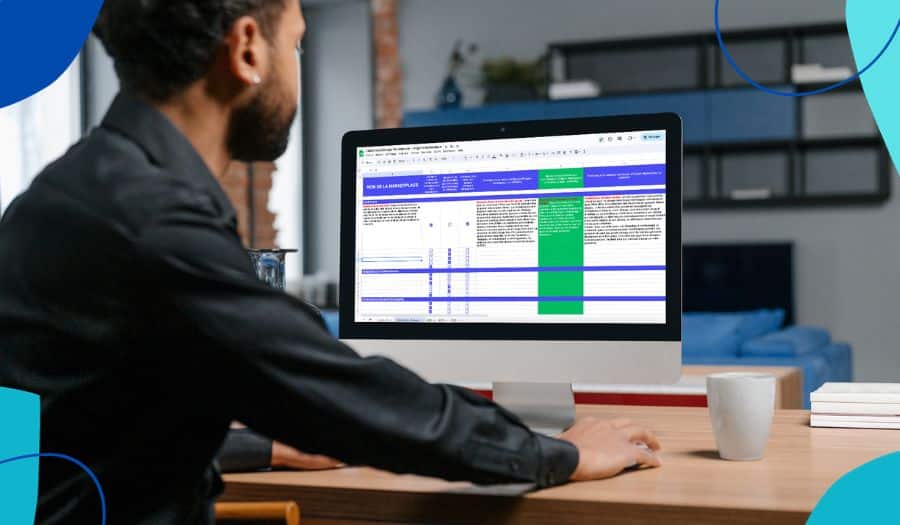
Easily create and define the buyer persona of your marketplace platfom.
Download our free guide to defining your marketplace’s buyer persona, with a concrete C2C marketplace case study included.
7. Prepare a launch plan
A well-prepared launch plan matters more than most first-time marketplace builders expect. Set a clear timeline, plan your communication to reach the right audience (future sellers and buyers alike), and line up your marketing campaigns, especially on social media, ahead of launch day rather than after it.
Team Tips 🎓
Have your first sellers onboarded and their listings live before launch day. This avoids the “empty store” effect for your first visitors. A visitor who has a good first experience is much easier to bring back than one who arrived to an empty catalog and left unimpressed.
8. Recruit and train your team
Running a marketplace takes a broader mix of in-house skills than most founders expect going in. Build a team that covers business development (recruiting sellers and buyers), account management (supporting sellers and tracking their performance), and moderation or dispute handling. Without this in place early, it’s hard to scale the platform in good conditions once volume picks up.
Before you get started
Building a marketplace isn’t something you improvise. It’s an ambitious project that takes method, rigor, and continuous adjustment, but following these 8 steps, from framing your idea to building your team, puts you on solid footing in a genuinely fast-growing market.
Preppy Sport is a useful proof point here: by automating onboarding, payment release, and shipment tracking on Origami Marketplace, its founder went from needing a team of 6 to running the platform alone, while the business kept growing. That’s a concrete illustration of what a well-built marketplace can do for the person running it, not just for the buyers and sellers on it.
At Origami Marketplace, we’re here to help you get started. If you’d like advice on your own project, our team can walk through it with you, no obligation.
Do you want to build an agile and future-proof platform?
Let’s discuss it. our expertise extends beyond the tool as we help you structure your project with the right methodology to guarantee its success.