Product Data Management (PDM): B2B Marketplace & PIM

Gestion des données produit (PDM) : Marketplace B2B & PIM

In the world of B2B e-commerce, product data management is far more than just a technical topic: it is a key performance driver. With massive catalogs, complex pricing structures, multiple product variations, and client-specific constraints, data quickly becomes central to ensuring consistency, efficiency, and growth.

At Origami Marketplace, we tackle these challenges daily. Our solution is natively designed to handle this complexity, turning your data challenges into a conversion engine.

1. Why structured product data is indispensable in B2B.

In a B2B environment, professional buyers have high expectations: they demand clear, precise, up-to-date product sheets available across all channels. This data feeds your marketplace, ERPs, e-procurement integrations, catalog exports, sales tools, and partner system feeds.

Without a centralized single source of truth, every tool, team, or channel risks displaying divergent information. This inevitably generates:

  • Pricing errors.
  • Inconsistencies in technical descriptions.
  • Misreported stockouts.

Such unreliability costs internal time, weakens your platform’s credibility, and leads to client churn. In a highly competitive context, the professional buying experience no longer tolerates approximation.

2. Definition: what does product data management cover?

Product Data Management (often associated with PIM – Product Information Management) encompasses all information related to your items, from technical characteristics to their commercial presentation across your marketplace’s various touchpoints.

Two dimensions are particularly important:

  1. The technical and internal dimension: Structural information such as references (SKUs), specifications, standards, weight, dimensions, and nomenclature.
  2. The commercial and omnichannel dimension: Marketing descriptions, HD visuals, SEO attributes, commercial conditions, tiered pricing per client or segment, and formats required for each distribution channel.

A high-performance marketplace solution must not only centralize this data but also make it actionable, consistent, and easy to synchronize across all your systems.

3. The limits of traditional tools for B2B catalogs.

Many B2B companies still rely on Excel, scattered databases, or ERP modules ill-suited for product data complexity. While these tools may suffice for a small single-channel catalog, they quickly become obsolete in a multi-vendor and omnichannel context.

The risks are manifold: repetitive manual entry, human errors, and a lack of responsiveness. Conversely, a structured and automated approach ensures a consistent product presentation on every interaction point, whether it’s a marketplace site, an e-procurement portal, or a third-party channel.

Ready to transform your B2B e-commerce?

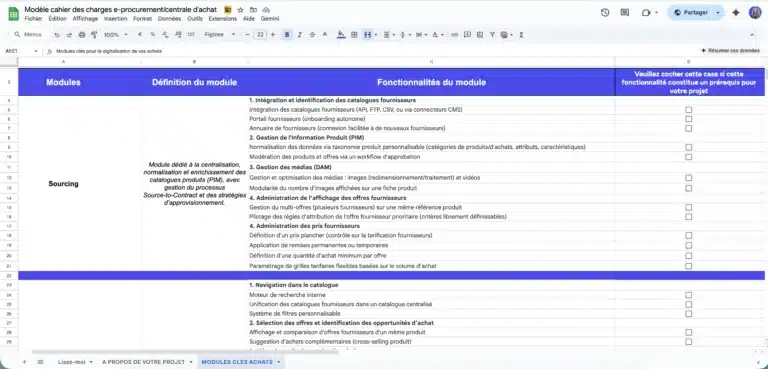
To help you develop the best platform possible, we’ve gathered all the must-have features, key technical considerations, and best practices in a comprehensive document:

Download the Specifications template 🗒

Perfect for smaller or medium-scale projects without a formal purchasing process. It will help you outline your requirements effectively and streamline your selection process.

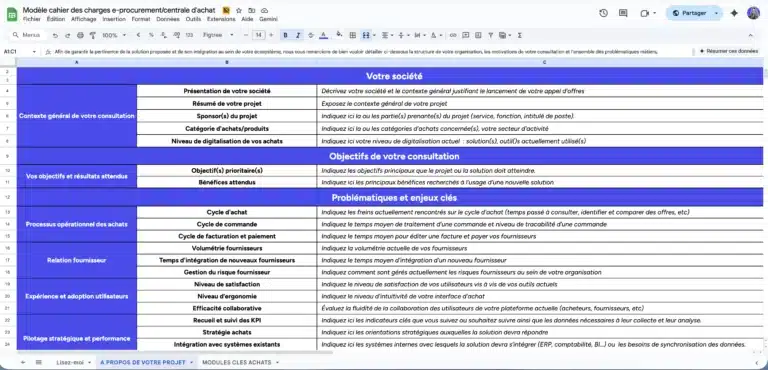
Download the Request for Proposal template 📒

Ideal for larger, more complex marketplace projects with a formal purchasing department or advanced procurement policies.

4. Concrete data challenges for your B2B marketplace.

🔁 Consistency across all channels (Omnichannel)

Your platform must guarantee that every product is presented with the same information (price, availability, attributes) regardless of how your clients access it: via the marketplace, an internal ordering portal, or external connectors. Without this, you open the door to errors and a degraded customer experience. Origami Marketplace manages this information from a unique central repository, synchronized in real-time with all your sales channels.

⏱️ Time savings and internal error reduction

Good product data management eliminates endless queues of manual corrections. Your teams no longer have to juggle between files and disparate back-offices: everything is accessible and controlled from a single platform.

A better buying experience (UX)

B2B buyers today expect a fluid, autonomous, and transparent experience. Complete product information and personalized data build trust and drive conversio, essential elements for generating recurring sales and retaining clients.

5. Best practices for effectively structuring product data.

📌 Normalize your attributes and categories

Defining common naming rules, a clear category structure, and a consistent taxonomy facilitates internal understanding and optimizes navigation for your buyers. Rigorous normalization is indispensable for effectively managing variants, specific attributes, and complex pricing.

📌 Adopt a single source of truth (SSOT)

A centralized repository prevents duplicates and information discrepancies. All actors in your marketplace, whether internal teams or external vendors, work from the same base. It is this unique repository that feeds tools, interfaces, and automated flows.

📌 Define workflows and clear governance

Data quality depends as much on a good tool as on well-thought-out governance.

  • Who creates the data?
  • Who validates it?
  • How are updates controlled?

At Origami Marketplace, every modification can be subject to customizable validation rules, ensuring consistency and compliance.

Theory is one thing, but the reality of your IT system (ERP, existing PIM, business specifics) is another. Don't get stuck on technical questions: we're here to discuss them. Sometimes, a simple informal exchange is enough to validate a strategy or clear up a doubt.

Alexandre Duquenoy

Alexandre Duquenoy

6. How Origami Marketplace optimizes B2B product data.

📍 A flexible architecture: integrated PIM or connected

It’s a recurring question: does Origami replace your PIM?

  • If you don’t have a PIM: Origami Marketplace centralizes all product information and acts as your unique repository.
  • If you are already equipped: Our solution connects natively to your existing PIM to retrieve your data, while specifically managing the catalogs of your third-party vendors that are not in your PIM.

📍 Simplified vendor onboarding and data mapping

One of the major bottlenecks in B2B marketplaces is retrieving supplier data, often sent in heterogeneous Excel formats. Your vendors import their files and map their columns to your catalog structure autonomously. Result: less manual processing for your teams and accelerated time-to-market for new products.

📍 Management of attributes, variants and commercial conditions

Our solution natively handles B2B complexity:

  • Management of product variants (dimensions, models, specifications).
  • Flexible pricing (fixed prices, custom price lists per client or group).
  • Management of promotions and discounts according to your business rules.

📍 Real-time synchronization

Information is updated in real-time and synchronized with your key systems (ERP, e-procurement modules, industrial export systems). Any product data change (stock, price) is immediately reflected where it counts.

📍 Collaborative workflows

The solution integrates customizable validation workflows to structure the creation, review, and publication process. You maintain total control over the quality of displayed data, even with hundreds of external vendors.

7. What are the benefits of centralized management?

Structured and centralized data management translates into concrete results for your business:

  1. Reduction in errors and returns: Reliable product information limits incorrect orders.
  2. Increased operational efficiency: Less manual entry for internal teams, freeing up time for high-value actions.
  3. Better conversion and customer satisfaction: Clear product sheets build buyer trust and streamline the purchasing process.

To wrap up:

In an increasingly complex B2B market, rigorous product data management is no longer a luxury; it is a necessity. At Origami Marketplace, we believe data must be at the heart of your strategy: centralized, synchronized, and structured to meet the requirements of professional buyers and partners.

If you wish to transform your product data management into a real competitive advantage, our team can guide you to optimize your catalog, workflows, and processes: from the first vendor onboarding to advanced synchronization with your existing systems.

Want to build an agile and sustainable B2B platform?

Let’s talk about it. Our expertise isn’t limited to the tool itself. We help you structure your project using the right method to ensure its success.

FAQ: Product data management

What is product data management in B2B e-commerce?

B2B product data management involves centralizing, structuring, and maintaining all information related to items (technical specs, descriptions, prices, variants, visuals) to ensure consistency across all sales channels.

Why is catalog management more complex in B2B than in B2C?

B2B catalogs often include thousands of SKUs, complex technical variants, personalized pricing per client, as well as regulatory or industrial constraints, making data structuring much more critical.

What is the difference between an ERP and a product data management solution?

An ERP primarily manages internal operations (stock, orders, finance), whereas a product data management solution or marketplace platform structures, enriches, and broadcasts product information to sales channels for the customer experience.

How can errors in product data be avoided?

Implementing a single source of truth, attribute normalization rules, and validation workflows (like those offered by Origami) drastically limits inconsistencies and human errors.

Why does a B2B marketplace need centralized product data management?

A marketplace involves multiple vendors, channels, and connected systems. Centralized management guarantees consistency, real-time synchronization, and the reliability of information displayed to buyers, regardless of the vendor.