Becoming a Marketplace Seller in 2026: Guide + Strategies
- Arnaud
- 6-minute read

The rise of e-commerce has transformed the way businesses reach their clients. At the heart of this revolution are marketplaces (or online market squares), which have become essential sales channels for e-merchants, SMEs, and D2C brands.
In 2026, ignoring these platforms amounts to depriving oneself of a significant share of the market. However, getting started is not without risks. Between the complexity of inventory management, the pressure of commissions, and the demands of algorithms, many sellers fail due to a lack of preparation.
This guide aims to be the most complete and neutral resource for understanding the stakes, steps, and tools necessary to become a marketplace seller and succeed in your multi-platform sales strategy.
TABLE OF CONTENTS:
- What is a marketplace and the role of the partner seller?
- Why sell on a marketplace? Advantages and limitations
- Who can become a seller? Access conditions
- Which marketplaces to choose for your sector?
- The onboarding process step by step
- The 3 fatal errors of new sellers (and how to avoid them)
- Selling on multiple marketplaces: The breakthrough zone
- Which tools to optimize your seller activity?
- FAQ: Frequently asked questions about marketplace selling
1. What is a marketplace and the role of the partner seller?
A marketplace is a digital platform that connects third-party sellers (professionals or individuals) and buyers. Unlike a classic e-commerce site that sells its own products, the marketplace acts as a trusted third party, managing the transaction, secure payment, and often part of the customer service.
The partner seller is the commercial entity that registers on the platform to offer its catalog. This status implies complying with the General Terms of Sale (GTCS) and the platform’s quality charter, in exchange for access to its customer base and traffic.
The key distinction: The e-merchant invests in acquiring traffic for their own site, whereas the partner seller pays a commission on sales to benefit from the marketplace’s native traffic.
2. Why sell on a marketplace? Advantages and limitations.
The decision to sell on marketplaces must be carefully considered. While the benefits are considerable, the constraints and risks of dependency should not be underestimated.
The benefits (Visibility, Traffic, Trust):
The major advantage lies in immediate access to a massive and qualified audience (“Hot traffic“).
- Increase in visibility: Your products are exposed to millions of daily visitors who are already in the buying phase.
- Credibility and trust: The customer is reassured by the guarantees offered by the platform (refunds, simplified returns).
- Simplified logistics: Services like FBA (Fulfillment by Amazon) or Cdiscount Fulfillment allow you to delegate storage and shipping.
- Rapid internationalization: Major marketplaces offer gateways to sell abroad without managing local administrative complexity.
The constraints (Commissions, Dependency, Competition):
| Constraint | Description | Strategic Impact |
|---|---|---|
| 💸Costs and commissions | The marketplace takes a commission on every sale (5% to 20%) + a monthly subscription. | Reduction of net margins. Requires adapted pricing. |
| 🔗Dependency | The seller is subject to algorithms and unilateral decisions by the platform. | Risk of de-listing or account suspension (Buy Box). |
| ⚔️Aggressive competition | Direct competition with thousands of sellers and sometimes the marketplace itself. | Requires constant optimization of product listings. |
| 👤Diluted customer relationship | The customer relationship belongs to the marketplace. | Difficulty building your own customer database (CRM). |
3. Who can become a marketplace seller? Access conditions.
To become a marketplace seller, it is imperative to meet strict conditions guaranteeing the legality of transactions. Generalists like Fnac, Darty, or Amazon have rigorous eligibility criteria (KYC).
Legal status and compliance (RCS, VAT):
The first requirement is to be a legally established professional seller.
- Registration: Be registered with the Trade and Companies Register (RCS) and have a valid SIRET/SIREN number (Kbis extract less than 3 months old).
- Tax compliance: Master the management of intracommunity VAT and customs declarations (OSS – One Stop Shop) for international sales.
- Insurance: Professional civil liability insurance is often required.
Logistical requirements and quality charter:
Marketplaces protect their reputation by imposing high standards (SLA).
- Local Customer Service: Platforms like Darty require after-sales service in French.
- Performance KPIs: Cancellation rates, defective order rates, adherence to shipping deadlines. A poor score leads to penalties.
4. Which marketplaces to choose to sell your products?
There is no universal “best marketplace.” The choice depends on your product category.
The generalists (Volume and Visibility):
- Amazon: Global leader. Essential for international reach and logistics (FBA).
- Cdiscount: Historic French player, very strong in high-tech and home goods.
- Fnac / Darty: Strong brand image, high purchasing power audience (CSP+), ideal for appliances and cultural products.
The specialists (Qualified audience):
- Toutmonmatos: The DIY and gardening specialist for professionals.
- Back Market: The global reference for refurbished goods.
- Leroy Merlin: Positions itself on home improvement with a strict selection of sellers.
- Origine France Garantie: Specialized in products with controlled origin.
Among the specialized marketplaces, there are also branch-specific ones such as French federations: the French Tennis Federation, the French Football Federation, or the French Mountain and Climbing Federation.
5. How to become a seller? The onboarding process.
1. Registration and validation (KYC):
The “Know Your Customer” step is mandatory to fight fraud. Prepare your documents (Kbis, RIB/Bank Details, ID of the beneficial owner) in advance to avoid blocks that can last several weeks.
2. Catalog integration:
- Feed format: CSV, XML, or API.
- SEO Optimization: Your product listings must contain the right keywords to appear in the internal search engine.
- Normalization: Your products must correspond to the marketplace’s precise categories (Mapping).
3. Operational management:
Speed is key. An order must be accepted and shipped often within 24 to 48 hours to satisfy the algorithms.
6. The 3 fatal errors of new sellers (and how to avoid them)
Before talking about tools, it is crucial to identify the traps that cause 30% of new sellers to fail within the first year.
- Neglecting the real margin: Many forget to include shipping costs, returns, and the marketing commission in their calculation. Result: they sell at a loss without knowing it.
- The phantom stock out: Selling a product on Amazon when it has just been sold on your own site. This is the #1 cause of account suspension for “bad customer experience.”
- Underestimating Customer Service: Thinking that replying within 48h is sufficient. On most platforms, the expected timeframe is less than 24h (including weekends).
7. Selling on multiple marketplaces: The breakthrough zone.
Once experience is gained, diversification (multi-marketplace) is the most powerful growth lever, but also the riskiest without automation.
Why multi-marketplace is lever #1:
- Audience coverage: Capturing different segments (e.g., Tousmonmatos for pros or Amazon for the general public).
- Reduction of dependency: If one account is suspended, your activity survives thanks to the other channels.
The operational risks without adapted tools:
Managing inventory manually on more than two channels is humanly impossible without error.
- Stock synchronization: Risk of selling what you no longer have.
- Price updates: Difficulty reacting to competitors’ promotions.
How to manage multi-platform selling effectively?
The key lies in feed automation. Your stock must be unified. When a product is sold on Fnac, the stock must be instantly decremented on Darty, Amazon, and your e-commerce site. This is the role of the Feed Manager.
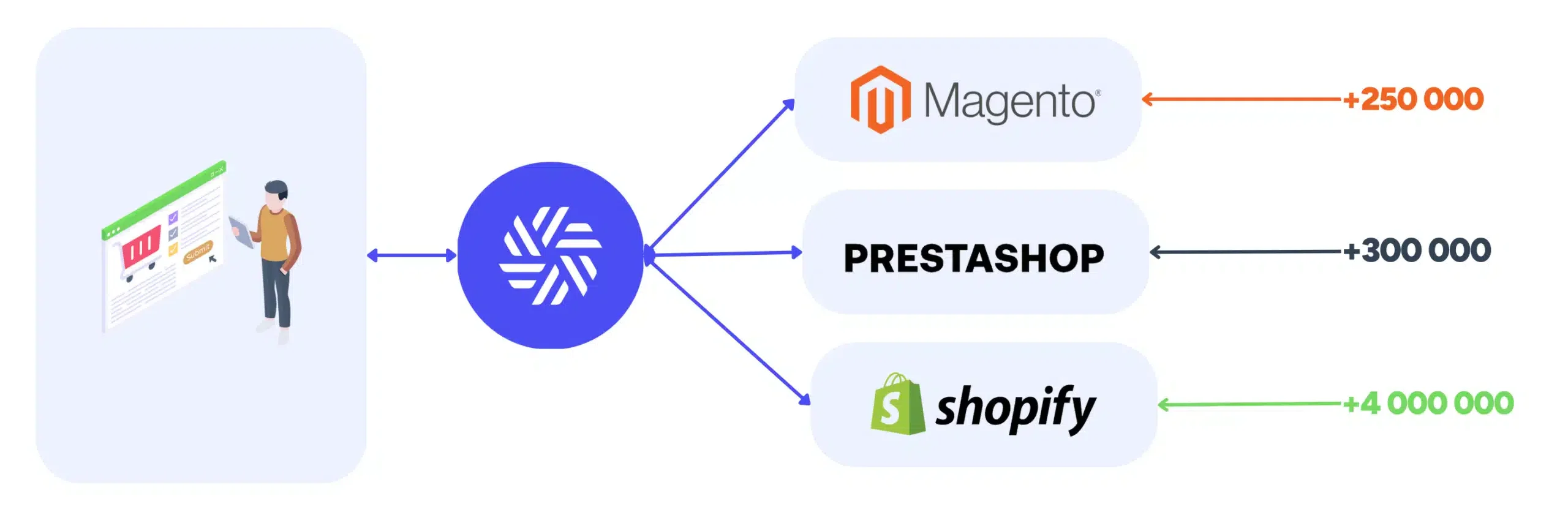
The importance of a robust marketplace connector. Rather than managing Excel files, a connector (middleware) bridges the gap between your ERP/PIM and the marketplaces via API. It ensures data fluidity: catalog, stocks, prices, orders, and parcel tracking numbers.
8. Which tools to optimize your seller activity?
| Tool | Limitations / Advantages |
|---|---|
| Excel Tables | ⛔️ Maximal risk of error, impossible to scale. |
| Native Solutions | ⛔️ Works only for a single platform (silo). |
| Marketplace Connectors | ✅ Centralization, automation, real-time multi-channel management. |
For e-merchants who wish to structure their growth without technical hassles, using a dedicated solution is recommended. Origami Link positions itself here as the facilitating connector, simplifying the integration and automation of your products on the largest marketplaces.
For more information on Origami Link, we have an article that explains it in detail for sellers who wish to join.
Structuring your growth on marketplaces
Becoming a marketplace seller is an unavoidable strategic step for any e-commerce player in 2026. Success no longer lies in simple “presence,” but in operational excellence and mastery of multi-channel sales.
Do not let technical complexity hold back your commercial expansion. Equip yourself with the right tools to transform these constraints into a competitive advantage.
Ready to import your products onto new marketplaces?
Don’t let technology limit your commercial potential anymore. Join the operators and sellers who already generate an average business volume of over 3 million euros per month via our network.
FAQ: Frequently asked questions about marketplace selling.
To help you finalize your thoughts, here are the answers to the most common questions:
Yes, it is entirely possible. Marketplaces provide the complete infrastructure. However, having a showcase site reassures customers and legitimizes your brand.
The cost is twofold. First, a monthly subscription to the platform (generally around €39/month excl. VAT). Second, a commission on sales (ranging from 5% to 20% depending on the product category). You must also factor in logistics costs and potential marketing fees (sponsored ads).
Technically, no. You can manage everything manually via Excel. However, if you sell on multiple platforms or have more than 100 products, it becomes operationally essential to avoid stock errors (overselling) and to save time on updating prices and orders.
Yes, provided you control your margin structure. While the margin per unit is often lower than on your own site (due to commissions), the sales volume generated by the marketplace’s traffic allows you to generate significant gross profit. It is a volume strategy, not just a margin strategy.
Count on 2 to 5 weeks. The longest stage is often the administrative validation of your account (KYC) by the marketplace. Once the account is active, catalog integration and “mapping” can be done in a few days with a good tool.